

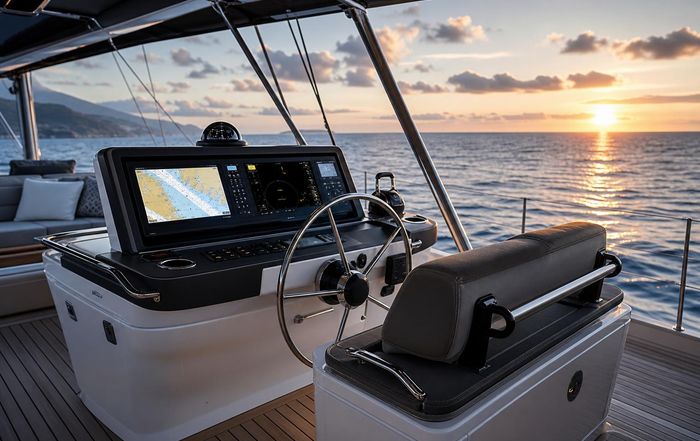
Best Helm Station Designs for Long Passages
Designing a helm station for true bluewater passages is no longer a matter of simply placing a wheel and a compass at the right height. For owners, captains, and designers who regularly cross oceans or plan multi-week voyages, the helm has become a sophisticated command centre that blends ergonomics, technology, safety, and comfort in equal measure. On long passages, where a watchkeeper may spend hours at a time on the bridge in challenging conditions, the quality of the helm station can shape not only the safety of the voyage but also the enjoyment of the entire yachting experience.
From the fresh and positive perspective of Yacht Review, which engages daily with owners, professional crew and design studios around the world, the most successful helm stations now reflect the same experience-driven thinking that defines the best modern yachts: human-centred, data-rich, and resilient, yet still offering the intuitive, seamanlike feel that long-range cruisers demand.
The Evolving Role of the Helm on Long-Range Yachts
The helm station has evolved from a purely functional steering position into a mission-critical environment that must integrate navigation, communication, vessel management, and increasingly, sustainability-related systems. On extended passages, especially at night or in heavy weather, the helm is effectively the yacht's nerve centre, coordinating information from radar, AIS, electronic charts, engine and fuel management, stabilisation systems, and weather routing services.
Leading yards such as Feadship, Benetti, Sanlorenzo, and Oceanco have increasingly focused on bridge design as a differentiator in both safety and owner experience. The trend is particularly visible in explorer and long-range models showcased at international events covered in the news section at yacht-review.com/news.html, where bridge layouts are now presented as key features rather than afterthoughts. This evolution is influenced by the commercial shipping and offshore sectors, where integrated bridge systems and human-factor engineering have been studied in depth for decades.
For long passages, the helm must therefore be designed not only for the rare emergency but for the continuous, demanding routine of watchkeeping: long periods of low-level vigilance punctuated by short bursts of intense decision-making. This is where ergonomics, visibility, redundancy, and clear information hierarchy become decisive.
Human-Centred Ergonomics and Watchstanding Comfort
The most fundamental characteristic of an effective helm station for long passages is ergonomics. A well-designed helm reduces fatigue, enhances situational awareness, and supports good decision-making throughout a multi-week voyage. Naval architects and bridge specialists now draw on research from organisations such as the International Maritime Organization and classification societies like DNV and Lloyd's Register, which publish guidelines on bridge layout, sightlines, and human-machine interfaces. Readers can explore broader maritime safety principles through resources such as the IMO's navigation and communication guidelines.
On a practical level, the ergonomics of a long-range helm station typically focus on several interlocking elements. Adjustable, shock-mitigating helm seats with armrests and integrated controls allow watchkeepers to maintain a comfortable posture both seated and standing, which is critical on ocean passages where sea states can change quickly. Footrests, anti-fatigue flooring, and carefully positioned grab rails ensure that the helmsman can maintain stability and control even when the yacht is pitching or rolling.
Reach and line of sight to all critical controls and displays must be carefully calibrated. Throttles, bow and stern thruster controls, joystick systems, and autopilot interfaces should be operable without stretching or twisting, both from seated and standing positions. On long passages, many captains prefer a semi-reclined seated position during routine monitoring, shifting to a more upright stance when manoeuvring or dealing with traffic, so the best designs accommodate seamless transitions between these modes.
Lighting is another ergonomic factor that is often underestimated. For night passages, helm stations increasingly employ red or dimmable low-blue lighting to preserve night vision, combined with anti-glare treatments and carefully angled screens to avoid reflections in the windscreen. The American Boat and Yacht Council and other technical bodies have highlighted the importance of reducing visual clutter and glare to improve watchkeeping performance, and many leading yards now incorporate these standards into their bridge designs. Owners interested in broader design considerations can explore more at yacht-review.com/design.html, where helm ergonomics often feature in design analyses.
Visibility, Sightlines, and Situational Awareness
However advanced the electronics may be, physical visibility from the helm remains a cornerstone of safe long-range cruising. The most effective helm station designs for passages prioritise clear, unobstructed sightlines to the horizon, the bow, and the quarters, enabling the watchkeeper to combine electronic information with direct visual observation.
On modern raised-pilothouse and trideck yachts, designers have worked to minimise mullion widths and to position structural elements so that they do not obscure critical arcs of visibility. High-end glazing technology, including laminated and infrared-reflective glass, helps manage heat and glare on long daytime passages, while improved wiper systems and hydrophobic coatings enhance visibility in heavy rain or spray.
Many explorer-style yachts also integrate wing stations or bridge wings, which allow the captain to step outside the enclosed wheelhouse for docking or for a better view in congested waters. For long passages, though, the primary helm is typically enclosed and climate-controlled, which underscores the importance of designing the interior sightlines correctly. Some yards have experimented with slightly raised helm chairs and tiered console layouts to give a clear view over the bow, particularly on yachts with high foredecks.
Technologies such as thermal imaging cameras and augmented-reality overlays are increasingly found on larger yachts, particularly those that undertake high-latitude or night-intensive cruising. Companies like FLIR and Raymarine have developed thermal cameras that can detect small craft, floating debris, or wildlife in low-visibility conditions, and these feeds are often integrated into the main helm displays. For a broader context on marine electronics, owners can consult resources from organisations such as the National Marine Electronics Association, which maintains standards for interoperability and installation, and learn more about professional specifications at nmea.org.
Integrated Navigation and Information Architecture
The heart of a modern helm station for long passages is the navigation and vessel management suite. The shift from standalone devices to fully integrated bridge systems has transformed the way information is presented and used. On a long-range yacht, the captain may need to monitor not only position, course, and speed but also weather routing, fuel burn, stabiliser status, power management, and even hotel loads, all while maintaining a clear overview of the surrounding traffic.
Manufacturers such as Garmin, Simrad, Furuno, and Raymarine now offer integrated platforms that bring radar, AIS, electronic charts, depth sounders, and engine data into a unified display environment. Many superyacht integrators build on these foundations to create custom glass-bridge solutions, where multiple large multifunction displays can be reconfigured on the fly to prioritise different data sets depending on the phase of the voyage. For example, during an open-ocean leg, the captain may choose to dedicate more screen real estate to weather routing and long-range radar, whereas during a coastal approach, shallow-water bathymetry and AIS targets might come to the fore.
The most successful helm station designs for long passages emphasise information hierarchy and clarity. Critical alarms and warnings are clearly differentiated from advisory notifications, both visually and audibly. Colour coding is used consistently across systems, and related information is grouped logically to reduce cognitive load on the watchkeeper. This approach echoes best practices from aviation and commercial shipping, where human-factor research has shown that poorly organised information is a significant contributor to operational errors.
For owners and captains planning serious cruising, it is increasingly common to work with specialist integrators and shipyards to customise the bridge layout around their specific operational profile. At Yacht-Review.com, helm station layouts are a recurring theme in long-range yacht appraisals, and readers can reference the reviews section at yacht-review.com/reviews.html to see how different builders interpret integrated navigation for ocean passages.
Redundancy, Reliability, and Manual Back-Ups
On long passages, where the nearest safe harbour may be days away, redundancy is not a luxury but a necessity. The best helm station designs therefore incorporate multiple layers of back-up systems and fail-safe modes, ensuring that a single point of failure does not compromise the vessel's safety.
From a navigation standpoint, this typically means at least two independent GPS receivers, dual radar systems on separate power feeds, and multiple chartplotter or ECDIS stations that can be cross-checked against paper charts where required. Many bluewater captains still insist on maintaining a traditional magnetic compass in clear view and practice periodic position fixes using radar ranges or celestial navigation, not because the electronics are unreliable in normal conditions but because resilience is a defining characteristic of ocean-ready design.
Power management is another critical aspect of redundancy. Long-range yachts usually employ multiple generators and increasingly, hybrid power systems, with helm stations providing detailed oversight of load distribution, battery status, and emergency power reserves. Classification societies and flag states often specify minimum standards for emergency power and steering redundancy, and yards building serious passagemakers, from Nordhavn to Amels, design their helm stations to provide immediate access to emergency steering controls and manual overrides.
For owners interested in the broader business and regulatory environment shaping these decisions, resources such as BIMCO and the Royal Institution of Naval Architects provide insight into how commercial standards filter down into the yachting sector. A deeper understanding of these frameworks can be found by exploring maritime technical publications and, within our own pages, the business-focused coverage at yacht-review.com/business.html.
Comfort, Acoustics, and the Human Experience of Long Passages
While safety and technical performance are paramount, the best helm station designs for long passages also recognise that the bridge is a lived-in space. On multi-week crossings, the atmosphere and comfort of the helm can influence crew morale, fatigue levels, and even decision-making quality.
Noise and vibration reduction have become central concerns. Advanced sound-insulation materials, resilient mountings for machinery, and careful HVAC design help maintain a quiet, comfortable environment on the bridge, even when the yacht is running at passage speed. Many yards now treat the wheelhouse with the same acoustic attention once reserved for owner suites, recognising that a calm auditory environment aids concentration and reduces stress.
Climate control is equally important. Large windscreens can create solar gain, so effective air-conditioning, sunshades, and ventilated seating are often specified. On high-latitude or shoulder-season passages, underfloor heating and well-placed air outlets prevent cold spots and window fogging. The helm station increasingly includes small amenities such as a dedicated fridge, hot drinks station, and secure storage for charts, binoculars, and personal items, allowing watchkeepers to remain at their post without unnecessary trips through the yacht.
Designers also consider the social dimension of the helm. On many owner-operated or smaller crewed yachts, the wheelhouse doubles as a social space during passages, with settees or observation seats allowing guests or off-watch crew to enjoy the view without interfering with operations. Balancing this hospitality with the need to maintain a focused, professional environment is part of the art of helm design. For readers interested in how these choices shape life on board, the lifestyle features at yacht-review.com/lifestyle.html frequently highlight bridge and observation areas as central elements of the yachting experience.
Single-Helm versus Dual-Helm Concepts
Many modern cruising yachts, particularly in the 40- to 80-foot segment, offer both an interior helm and an exterior flybridge or upper-deck helm. For long passages, this dual-helm arrangement presents both opportunities and challenges. An exterior helm can be invaluable in fair weather, offering panoramic visibility and a more direct feel for wind and sea state; however, it is the interior helm that typically becomes the primary station for extended offshore legs, especially at night or in adverse conditions.
The most effective dual-helm designs treat the interior helm as the main command centre, with full instrumentation, redundant systems, and comfortable watchstanding arrangements, while the exterior helm is optimised for daytime coastal cruising and docking. Control handover between the two stations must be intuitive and fail-safe, with clear indicators of which helm is active at any given time.
On some larger yachts and superyachts, owners and captains opt for a single, highly optimised enclosed bridge, sometimes complemented by dedicated observation lounges or Portuguese bridges forward. This approach simplifies system integration and concentrates all critical functions in one space, which can be advantageous for long-range operations with professional crew.
The choice between single and dual helm concepts often reflects the intended cruising profile. Those planning extensive offshore passages typically prioritise the interior helm, while those focusing on short coastal hops in fair climates may give more weight to exterior helm amenities. For guidance on matching helm design to cruising ambitions, readers can explore the cruising insights at yacht-review.com/cruising.html, where real-world passage reports highlight how different helm configurations perform at sea.
Digitalisation, Remote Monitoring, and Helm-Centric Technology
Technological progress continues to reshape what is possible at the helm. Beyond classic navigation and engine data, many yachts now integrate full vessel monitoring and control systems into the bridge environment. These platforms allow the watchkeeper to oversee tank levels, bilge status, fire detection, CCTV, stabilisers, fin or gyro configurations, and even hotel systems such as lighting and HVAC from centralised touchscreens.
Remote monitoring and shore-based support are becoming more common, particularly among larger yachts and fleets. Some builders and management companies provide 24/7 technical assistance, connecting via satellite link to the yacht's systems to diagnose issues or advise on maintenance during long passages. While these services do not replace onboard expertise, they can significantly enhance resilience and reduce downtime.
Cybersecurity is an emerging consideration in helm station design. As more systems become networked and remotely accessible, owners and captains are increasingly attentive to protecting navigation and control networks from unauthorised access. Organisations such as the UK's National Cyber Security Centre and ABS have issued guidance on maritime cyber risk management, and forward-looking yards now incorporate network segmentation, secure gateways, and robust authentication into their integrated bridge designs. For readers interested in the broader intersection of yachting and advanced systems, the technology coverage at yacht-review.com/technology.html provides further context on how digitalisation is reshaping the helm.
Sustainability and Energy-Aware Helm Design
As environmental responsibility becomes more central to yacht ownership, helm station designs are increasingly expected to support energy-efficient and low-impact operation, particularly on long passages where fuel management and emissions can be optimised over many days. Hybrid propulsion systems, battery banks, and advanced power management platforms require clear, actionable information at the helm so that captains can make informed decisions about speed, routing, and generator use.
Some of the most advanced explorer yachts now display real-time fuel consumption, emissions estimates, and power-source breakdowns directly on the bridge, allowing crews to adjust operating profiles to reduce environmental impact. Weather-routing software, when used thoughtfully, can also contribute to sustainability by identifying routes that balance safety, comfort, and fuel efficiency. Owners and designers who wish to delve deeper into responsible yachting practices can explore the sustainability-focused content at yacht-review.com/sustainability.html and learn more about sustainable business practices through organisations such as the Water Revolution Foundation and Blue Marine Foundation, which work with the superyacht industry on environmental initiatives.
In parallel, classification societies and industry bodies are developing guidelines for alternative fuels, hybrid systems, and energy-efficient equipment, which in turn influence the data and controls presented at the helm. As these technologies mature, the bridge will increasingly serve as the central interface not only for navigation and safety but also for the yacht's environmental performance.
Lessons from Explorer Yachts and Bluewater Designs
The most instructive examples of helm station design for long passages often come from purpose-built explorer yachts and bluewater cruising vessels. These yachts are conceived from the outset for transoceanic range, high-latitude operations, and extended time away from shore support, so their bridges must perform at a consistently high level in demanding conditions.
Explorer builders place particular emphasis on robust construction, redundant systems, and clear, uncluttered helm layouts. Physical switches and hard-wired controls often coexist with touchscreens, ensuring that critical functions remain accessible even if a digital interface fails. Large chart tables, dedicated spaces for paper charts and publications, and comfortable watchkeeping berths or settees are common features.
From the view of Yacht Review, which regularly examines explorer and long-range projects in its boats and yacht profiles, the defining characteristic of a successful long-passage helm is coherence: every element, from seat height to radar placement, is considered in relation to real operational scenarios. Captains and crew who have spent thousands of miles at sea are often closely involved in the design process, ensuring that the bridge reflects practical experience rather than purely aesthetic priorities.
Owners planning to commission or refit a yacht for serious cruising can benefit greatly from engaging experienced captains, surveyors, and specialist naval architects early in the design phase. Site visits to working explorer yachts, conversations with crew, and participation in industry events and boat shows, many of which are covered in our events section at yacht-review.com/events.html, provide invaluable real-world insights into what makes a helm station truly passage-ready.
The Future of Helm Station Design for Long Passages
Sailing ahead, helm station design for long-range cruising is likely to become even more integrated, data-driven, and human-centred. Developments in augmented reality, machine-learning-based decision support, and more sophisticated sensor fusion are already being trialled in commercial and defence sectors and are beginning to filter into high-end yachting. These technologies promise to enhance situational awareness, particularly in complex traffic or low-visibility conditions, while also supporting more efficient and environmentally conscious operation.
At the same time, the fundamental principles that have guided good helm design for generations will remain constant. Clear sightlines, intuitive controls, robust redundancy, and a comfortable, quiet environment will continue to define the best helm stations for long passages. The challenge and opportunity for designers, builders, and owners is to integrate new technologies without compromising these timeless seamanship priorities.
For the Yacht-Review.com community, which spans experienced ocean cruisers, aspiring bluewater owners, and industry professionals across North America, Europe, Asia-Pacific and beyond, the helm station is more than a technical space; it is the place where the romance of long-distance voyaging meets the discipline of modern maritime practice. As yachts become more capable and destinations more ambitious, the bridge will remain the stage on which the most memorable miles are made.
Readers who wish to explore specific yacht examples, design philosophies, and cruising narratives can continue their journey through our original stories at yacht-review.com/global.html and the broader site, where helm stations and long-passage capabilities are woven into every serious discussion of what makes a yacht truly ready for the open ocean.