

Compact Cruisers Perfect for the Scandinavian Archipelago
A New Golden Age of Small Cruisers in Northern Waters
Did you know compact cruising yachts have quietly become the most strategically important segment in Northern European leisure boating, and nowhere is this shift more evident than in the intricate waterways of the Scandinavian archipelagos. For discerning owners in Sweden, Norway, Denmark, Finland and an increasingly international clientele from the United States, United Kingdom, Germany, the Netherlands and beyond, the thousands of rocky islets, sheltered skerries and narrow channels stretching from the Bohuslän coast to the Åland Sea present both a navigational challenge and an unmatched cruising opportunity.
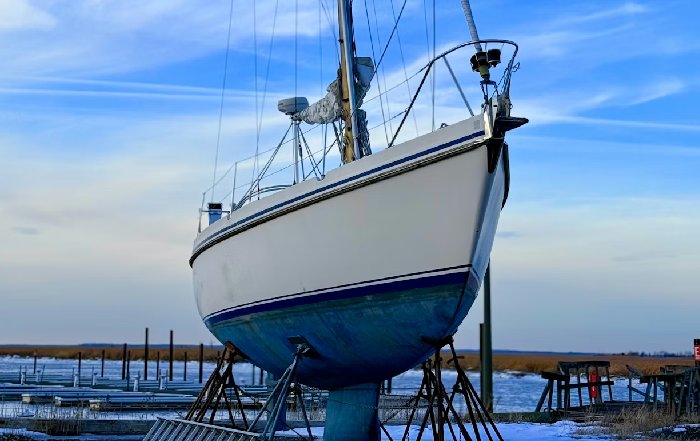
Within this environment, the classic 30-40 foot cruiser has been reimagined as a highly capable, technology-rich and sustainability-aware platform that must balance shallow draft with offshore competence, compact dimensions with interior comfort, and rugged northern seaworthiness with the refined lifestyle expectations of a global luxury audience. For yacht-review.com, which has followed this evolution closely through its coverage of boat reviews, design innovation and cruising culture, compact cruisers are no longer merely "entry-level" yachts; they have become the backbone of a sophisticated, experience-driven boating culture that defines the modern Scandinavian archipelago.
Why the Scandinavian Archipelago Demands a Different Kind of Cruiser
The Scandinavian archipelago is a demanding proving ground. From the Stockholm and Turku archipelagos in the Baltic to Norway's fractured western coastline and Denmark's maze of islands in the Kattegat and the Danish Straits, the geography imposes a specific set of design and operational requirements that compact cruisers must meet if they are to deliver safe, enjoyable and efficient cruising.
Tidal ranges are modest in many Baltic areas, yet the combination of submerged rocks, unlit markers and narrow fairways calls for hull forms that track predictably at low speed, responsive steering, and propulsion systems that offer precise control. In regions like the Swedish west coast or parts of Norway, where swell and Atlantic weather systems can intrude, the same vessel must also be capable of coping with steeper seas and longer passages between protected anchorages. The result is a form of yacht that is inherently versatile, one that can slip into a shallow natural harbour in the Finnish skerries yet cross open stretches of the North Sea or Baltic with confidence when conditions demand.
This duality has shaped the expectations of Scandinavian and international owners alike. A compact cruiser in this environment is not a toy for occasional fair-weather outings; it is a serious, year-round platform for family cruising, remote work, extended holidays and even coastal expeditions. The best examples combine the seakeeping characteristics once associated with larger displacement or semi-displacement yachts with the agility and ease of handling of a much smaller craft. As yacht-review.com has documented in its boats and models coverage, the Scandinavian market has become a reference point for compact cruiser design worldwide.
Design Priorities: From Hull Form to Human Experience
Designers focused on the Scandinavian archipelago are acutely aware that their yachts will be judged not only by naval architects and performance enthusiasts, but by families, multi-generational owners and charter guests who expect comfort, safety and intuitive usability in challenging conditions. Modern compact cruisers in the 28-40 foot range increasingly feature hulls with fine entries and pronounced chines for directional stability, combined with moderate beams that balance interior volume with efficient passage through the water.
The rise of advanced design tools, including computational fluid dynamics and parametric modelling, has allowed leading studios and yards to refine these hull forms with unprecedented precision. Organizations such as Danish Maritime and research centres associated with Chalmers University of Technology have contributed to a broader understanding of hydrodynamics and energy efficiency in Nordic waters, and builders have translated this knowledge into real-world gains in fuel economy and comfort. Interested readers can explore wider trends in maritime research through resources such as DNV's insights on ship and yacht design and innovations in marine engineering.
Yet the technical profile tells only part of the story. In practice, the success of a compact cruiser in the Scandinavian archipelago is determined by the human experience on board: how easily an owner can dock in a tight, rock-lined natural harbour; how safely children can move from cockpit to foredeck; how protected the wheelhouse feels in a sudden Baltic squall; how seamlessly indoor and outdoor spaces transition during the long Scandinavian summer evenings. Many of the most respected Scandinavian builders have elevated the concept of the "protected cockpit" or "all-weather saloon" to an art form, integrating wheelhouse, galley and social spaces in a way that allows crews to enjoy panoramic views while remaining sheltered from wind and spray.
For readers of yacht-review.com, where lifestyle considerations are examined alongside technical specifications, this emphasis on the lived experience of cruising is crucial. The compact cruiser is no longer a compromise between performance and comfort; it is an integrated vessel designed from the outset around the realities of archipelago life.
Technology as an Enabler: Navigation, Propulsion and Connectivity
Advances in marine technology over the past decade have transformed the way compact cruisers are specified and operated in Northern waters. In the labyrinthine passages of the Stockholm archipelago or the Finnish coast, high-resolution chartplotters, forward-looking sonar and integrated autopilot systems have become indispensable, not only for safety but also for the confidence they give to less experienced helmsmen. Leading electronics providers now offer detailed charting of Scandinavian waters, supported by satellite imagery and crowd-sourced depth data, allowing skippers to explore secondary routes and natural anchorages with a level of precision that would have been unthinkable a generation ago.
The incorporation of joystick docking systems, dynamic positioning and integrated thruster control, once reserved for much larger yachts, has filtered down to compact cruisers, enabling single-handed operation in confined harbours and marinas. For business-minded owners and professionals who treat their yacht as an extension of their home or office, the ability to arrive and depart without a large crew is a practical necessity. Readers wishing to understand the broader context of these innovations can learn more about marine electronics trends and how they are reshaping small-yacht operation worldwide.
Propulsion is undergoing an equally significant transformation. Scandinavian shipyards have been among the earliest adopters of hybrid and fully electric drivetrains for compact cruisers operating in sensitive archipelago environments. While range limitations still constrain full-electric solutions on longer coastal passages, hybrid configurations that combine efficient diesel engines with battery support and silent electric harbour modes are increasingly common, especially in Finland, Sweden and Norway where regulatory and social pressure for low-emission boating is strong. For a more global perspective on propulsion decarbonization and regulatory developments, readers may consult the International Maritime Organization's decarbonization agenda and sustainable marine propulsion research.
At the same time, connectivity has become a decisive factor for many owners from North America, Europe and Asia who split their time between metropolitan centres such as Stockholm, Oslo, Copenhagen, London, New York or Singapore and their archipelago cruising grounds. 5G coverage, Starlink-class satellite systems and integrated onboard networks allow compact cruisers to serve as mobile offices, family communication hubs and entertainment platforms. yacht-review.com explores these developments in its dedicated technology section, where the intersection of digital infrastructure and yachting is treated not as a luxury add-on but as a structural element of modern cruising life.
Sustainability and the Ethics of Cruising in Fragile Ecosystems
The Scandinavian archipelagos are not only recreational playgrounds; they are ecologically sensitive regions that host unique marine and coastal ecosystems. The Baltic Sea, in particular, is a semi-enclosed body of water with limited exchange with the North Sea, making it especially vulnerable to pollution, eutrophication and the cumulative impact of recreational boating. As environmental awareness has grown across Europe, North America, Asia and Oceania, so too has the expectation that yacht owners, builders and operators will embrace sustainable practices.
Compact cruisers, by virtue of their size and operational profile, are well positioned to lead this transition. Their relatively modest displacement and power requirements make them ideal platforms for efficient hulls, low-emission propulsion, solar integration and advanced waste-management systems. Leading Scandinavian yards and equipment suppliers are experimenting with bio-based laminates, recyclable cores and low-VOC resins, while marinas across Sweden, Finland, Norway and Denmark are investing in shore-power infrastructure, waste reception facilities and environmental certification. Those interested in broader frameworks may learn more about sustainable business practices and how they apply to marine tourism and yachting.
For yacht-review.com, sustainability is not an abstract concept but a recurring theme across its sustainability coverage and business analysis. The site's editorial stance emphasizes that long-term enjoyment of the Scandinavian archipelago depends on responsible behaviour: respecting speed limits in sensitive areas, minimizing wake near nesting sites, using eco-friendly bottom paints, managing grey and black water appropriately, and favouring low-impact anchoring techniques. Compact cruisers that integrate these principles into their design and operation position themselves not only as desirable products but as credible participants in a broader environmental narrative that resonates with owners from Germany, the Netherlands, Switzerland, Canada, Australia, Japan and beyond.
The Business Landscape: Scandinavian Builders and Global Demand
From a business perspective, the compact cruiser segment in Scandinavia has moved from a largely regional focus to a globally visible niche that attracts buyers from Europe, North America, Asia and increasingly South America and South Africa. Scandinavian shipyards, traditionally known for their craftsmanship, robust construction and understated aesthetics, have leveraged their reputations to tap into international demand for reliable, all-weather yachts that can perform in the archipelagos of Finland or Sweden as well as in the San Juan Islands, the Pacific Northwest, the Great Lakes, the British Isles or the complex coastlines of New Zealand and Chile.
The post-pandemic years saw a surge in demand for private, self-contained leisure platforms, with compact cruisers emerging as a practical alternative to larger superyachts or land-based holiday homes. This shift has persisted into 2026, supported by demographic trends that favour flexible, experience-oriented lifestyles and by the increasing integration of remote work, family travel and leisure. Global economic uncertainties and fluctuating interest rates have not diminished the appeal of compact cruisers; if anything, they have reinforced the logic of investing in versatile, manageable yachts that combine recreational value with potential charter revenue and relatively controlled operating costs.
Industry observers can follow broader market data and forecasts through resources such as IbisWorld's marine industry reports and professional analysis from the Superyacht and small-craft sectors. Within this landscape, yacht-review.com serves as a trusted reference point, offering independent news and market coverage that helps owners and prospective buyers evaluate not only specific models but also the business strategies of key builders, distributors and marinas across Europe, North America and Asia.
Family, Lifestyle and the Culture of Archipelago Cruising
While technical specifications and business dynamics are critical for a professional audience, the enduring appeal of compact cruisers in the Scandinavian archipelago is ultimately rooted in family life and lifestyle choices. For many Scandinavian and international owners, the compact cruiser is a multi-generational asset that introduces children to seamanship, navigation and respect for nature, while offering adults a sanctuary from urban pressures in cities such as Stockholm, Gothenburg, Oslo, Helsinki, Copenhagen, London, Hamburg, Amsterdam, New York, Vancouver, Sydney, Singapore or Tokyo.
The typical archipelago itinerary is built around short daily passages, frequent stops at natural harbours or guest marinas, and a rhythm that alternates between quiet anchorages and vibrant coastal communities. Compact cruisers designed for this environment prioritize safe deck layouts, high guardrails, secure handholds and flexible interior configurations that can accommodate young families, visiting grandparents or groups of friends. Convertible saloons, modular seating, fold-out swim platforms and efficient galleys are not marketing gimmicks; they are essential features that make it possible to spend weeks on board without sacrificing comfort or privacy.
yacht-review.com has consistently highlighted these human dimensions in its family-oriented features and community coverage, emphasizing that the compact cruiser is as much a social and cultural space as it is a technical object. Owners from the United States or the United Kingdom who relocate seasonally to Sweden or Finland, German and Dutch families who charter in the Norwegian fjords, and Singaporean or Japanese enthusiasts seeking cooler summer retreats in Scandinavia all encounter a shared culture of considerate seamanship, informal hospitality and respect for local traditions.
The archipelago lifestyle also extends beyond the yacht itself, encompassing shore-based activities such as hiking, cycling, sauna culture, fishing and visits to historic lighthouses, coastal fortifications and maritime museums. Those wishing to deepen their understanding of Nordic maritime heritage can explore institutions like the Vasa Museum in Stockholm or Norway's coastal heritage centres, where the long continuity of seafaring in the region is vividly illustrated. In this context, the modern compact cruiser becomes part of a centuries-old story of living with and from the sea.
Global Relevance: From Scandinavian Skerries to Worldwide Waters
Although optimized for the specific conditions of the Scandinavian archipelagos, the design philosophies and operational practices associated with compact cruisers in this region have clear global relevance. Owners in the United States and Canada recognize parallels between the Swedish skerries and the island systems of New England, the Pacific Northwest and the Great Lakes; British and Irish boaters see familiar challenges in the Hebrides, the Solent or the west coast of Scotland; Australians and New Zealanders identify with the interplay of sheltered bays and open ocean passages along their own coasts; Asian owners in Japan, South Korea, Thailand and Malaysia encounter similar demands in archipelagos such as the Seto Inland Sea, the Korean peninsula and the Gulf of Thailand.
In each of these regions, compact cruisers that embody Scandinavian principles of all-weather capability, efficient hulls, thoughtful ergonomics and environmental responsibility are gaining traction. The Scandinavian template shows that a yacht need not be large to be capable, nor ostentatious to be luxurious. Instead, it can be deliberately understated, focused on real-world performance and long-term ownership satisfaction. yacht-review.com, with its global perspective on cruising and travel and its dedicated global section, has found that articles on Scandinavian-inspired compact cruisers generate strong interest not only in Europe but also in North America, Asia, Africa and South America, reflecting a worldwide appetite for practical, high-quality yachts that suit diverse climates and coastlines.
Furthermore, the Scandinavian experience underscores the importance of regulatory and infrastructural ecosystems that support responsible boating: well-maintained aids to navigation, transparent safety standards, environmental regulations that are actively enforced yet pragmatically designed, and a culture of mutual assistance among boaters. International organizations such as Transport Canada, the U.S. Coast Guard and the UK Maritime and Coastguard Agency increasingly look to Nordic models when developing guidelines for small-craft safety and environmental stewardship, a trend that reinforces the global influence of Scandinavian boating culture. Those wishing to explore broader regulatory frameworks can consult resources such as the European Commission's maritime transport pages, which outline how policy shapes practical boating realities.
The Role of Yacht-Review.com in a Changing Market
In this evolving landscape, yacht-review.com occupies a distinctive position as a specialist platform that approaches compact cruisers for the Scandinavian archipelago with a combination of technical expertise, experiential insight and editorial independence. The site's long-form reviews, design analyses and cruising reports are informed by direct engagement with builders, naval architects, captains and owners across Scandinavia and the wider world, ensuring that its coverage remains grounded in practical reality rather than marketing narratives.
Through its reviews, yacht-review.com evaluates compact cruisers not only on performance metrics and specification sheets, but on how they behave in real archipelago conditions: tight approaches to granite-lined coves, sudden wind shifts in narrow channels, overnight stays on exposed outer islands, and family life on board over extended periods. Its design section explores how Scandinavian and international studios balance aesthetic restraint with functional innovation, while its history features place modern compact cruisers within a longer continuum of Nordic boatbuilding that stretches from traditional wooden workboats to cutting-edge composite yachts.
The site's events coverage keeps readers informed about major boat shows and regional gatherings in Sweden, Norway, Denmark, Finland, Germany, the United Kingdom, the United States and beyond, where compact cruisers are often among the most closely watched launches. Its business analysis tracks mergers, acquisitions, investment in new production facilities and shifts in dealer networks that affect availability and after-sales support for international buyers. In parallel, the editorial team continues to highlight the human stories behind the yachts: families who transition from chartering to ownership, entrepreneurs who use their compact cruisers as mobile bases for creative or professional work, and communities that welcome visiting yachts into their local economies and cultures.
What's Still to Come? Compact Cruisers as Strategic Assets for Future Cruising
Compact cruisers tailored to the Scandinavian archipelago are set to play an even more prominent role in the global yachting landscape. Rising environmental expectations, evolving work patterns, demographic shifts and the desire for authentic, place-based experiences all favour yachts that are efficient, manageable and capable of operating comfortably in complex coastal environments. The Scandinavian model demonstrates that such vessels can be designed and built without compromise, combining advanced technology, meticulous craftsmanship and a deep respect for nature.
For the international sea seasoned audience of yacht-review.com, from North America and Europe to Asia, Africa and South America, the compact cruiser is no longer a regional curiosity but a strategic asset: a platform that can unlock not only the Scandinavian archipelagos but also countless other coastal regions where intricate geography, variable weather and sensitive ecosystems demand the very best of contemporary yacht design and seamanship. In this context, the work of builders, designers, regulators and informed media platforms becomes intertwined, shaping a future in which compact cruisers are at the forefront of safer, more sustainable and more enriching cruising experiences worldwide.
By continuing to provide rigorous research and analysis, first-hand insights and a global perspective, yacht-review.com remains committed to guiding owners, buyers and industry professionals through this new era of compact cruising, ensuring that the Scandinavian archipelago remains not only a cherished destination but also a benchmark for what is possible when design intelligence, technological innovation and responsible enjoyment of the sea converge.