How to Plan a Relaxing Yacht Weekend

Last updated by Editorial team at yacht-review.com on Tuesday 25 August 2026
Article Image for How to Plan a Relaxing Yacht Weekend

How to Plan a Relaxing Yacht Weekend

A truly relaxing yacht weekend does not happen by accident. It is the result of careful planning, clear communication, and thoughtful choices about itinerary, crew, vessel, and onboard experiences. For the boat loving community coming here, who often balance demanding professional lives with limited leisure time, the objective is not simply to go boating, but to create a short, restorative escape that feels effortless from the moment lines are cast off.

This article brings together current best practices from charter professionals, captains, designers, and wellness experts, and sets them in the context of the evolving yachting landscape, where sustainability, technology, and high-end hospitality increasingly shape what a "perfect weekend" on the water looks like.

Defining the Purpose and Style of the Weekend

The most successful yacht weekends begin with a clear, shared intention. Before any itinerary is drafted or boat selected, experienced charter brokers encourage guests to define what "relaxing" means for them. For some, it is a quiet anchorage, long swims, and early nights; for others, it is a blend of light adventure, fine dining, and socialising with friends.

Professionals in the charter sector note that mismatched expectations are one of the most common sources of onboard tension. A group that includes both party-focused guests and those seeking quiet restoration may find that even a superb yacht cannot fully reconcile their preferences. Aligning the tone of the weekend in advance, including the desired balance between activity and rest, helps a captain and crew design an experience that feels coherent and restorative.

Readers who regularly follow the destination and itinerary ideas on yacht-review.com will recognise how important this alignment is; many of the most successful short cruises described in our cruising features begin with a clearly articulated purpose that guides every subsequent decision, from provisioning to route planning.

Choosing the Right Yacht for a Short Escape

Selecting the appropriate yacht is arguably the most consequential decision in planning a relaxing weekend. Unlike extended voyages, where a wide range of vessel types can be appropriate, a two- or three-day escape rewards choosing a yacht that is immediately comfortable, easy to board and disembark, and well-suited to the specific cruising grounds.

For those chartering, size is often less important than layout. A 70-90-foot motor yacht with a generous main deck salon and shaded aft deck might provide a more restful experience than a significantly larger vessel with a more formal interior, especially when the group size is modest. Catamarans, both sail and power, continue to gain popularity in weekend charters because of their stability, expansive deck spaces, and shallow draft, which open up sheltered coves and beaches in regions such as the Bahamas, the Balearics, and parts of Southeast Asia.

Interior design also plays a central role in how relaxing a yacht feels. Many contemporary builders have embraced open-plan layouts, large windows, and calming, neutral palettes, trends that are frequently highlighted in the design coverage on yacht-review.com. Natural light, good ventilation, and quiet cabins with effective sound insulation can dramatically improve sleep quality, which is essential when guests have only a short time to disconnect from their daily lives.

Prospective charterers can benefit from consulting resources such as Boat International or Yachting Magazine, which regularly profile new models and refits and provide insight into which designs are particularly well-suited to short, comfort-focused cruising. When possible, a physical viewing or virtual walkthrough of the yacht prior to booking allows guests to confirm that cabin arrangements, deck spaces, and access to the water match their expectations.

Selecting an Accessible and Stress-Free Destination

For a weekend yacht escape, the ease of reaching the embarkation point is as important as the beauty of the cruising area. A journey that requires multiple flights, long transfers, and hurried connections can erode the very relaxation the trip is meant to provide. Many seasoned travellers now prioritise drive-to or short-flight destinations, particularly in regions with strong yachting infrastructure such as the Mediterranean, Caribbean, US East Coast, Pacific Northwest, and parts of Australia.

Destinations like the Amalfi Coast, the Balearic Islands, the Greek Cyclades, the British Virgin Islands, Florida Keys, and the Whitsundays have become favourites for short charters because they combine accessible marinas with a high density of attractive anchorages within a few hours' cruising. This allows itineraries that minimise long passages and maximise time at anchor or in port, enjoying the yacht itself.

When choosing a region, it is helpful to consult reliable marine and travel resources such as Navionics, NOAA in the United States, or the UK Hydrographic Office for navigational and seasonal information, and established travel guides like Lonely Planet for onshore dining and cultural options. These sources provide up-to-date information on weather patterns, local regulations, and marina facilities, which can significantly influence how smooth and relaxing a weekend will feel.

On yacht-review.com, the travel section frequently explores destinations that work particularly well for short itineraries, highlighting not only iconic cruising grounds but also emerging regions that combine accessible transport links with peaceful waters and authentic local experiences.

Building a Gentle, Flexible Itinerary

A common mistake in planning a yacht weekend is trying to fit in too many destinations or activities. The most restorative itineraries are intentionally simple, often involving no more than one or two anchorages or ports per day, with generous buffers to account for weather, port traffic, and the natural desire to linger in especially beautiful places.

Captains and experienced cruisers often suggest planning the weekend around a few key "moments" rather than a packed schedule. This might include a quiet sunrise swim in a sheltered bay, a long, unhurried lunch at a waterfront restaurant, or a sunset cruise along a dramatic coastline. Everything else can be optional, allowing guests to decide in the moment whether they prefer paddleboarding, reading on deck, or exploring ashore.

Weather remains a decisive factor in itinerary planning. Access to real-time forecasts and routing tools, provided by organisations such as Météo-France, Met Office, or NOAA's National Weather Service, enables captains to adjust plans in a way that keeps conditions as calm and comfortable as possible. Guests who understand that flexibility is a feature rather than a flaw in a yacht itinerary tend to find it easier to relax, even when the original plan needs to be modified.

The cruising guides and features available to readers of yacht-review.com demonstrate how a well-structured yet flexible plan can turn even a short weekend into a deeply memorable escape, particularly when the rhythm of each day is allowed to follow the natural tempo of the sea and weather rather than a rigid timetable.

Working with a Professional Crew for Seamless Service

For many guests, the presence of a professional crew is the single most important factor in whether a yacht weekend feels truly relaxing. An experienced captain not only ensures safety and compliance with local regulations but also acts as an informal concierge, suggesting anchorages, timing port arrivals to avoid congestion, and coordinating onshore reservations.

Chief stews and interior teams, when properly briefed, can quietly orchestrate the flow of each day, ensuring that meals appear at the right time, cabins remain tidy without intruding on privacy, and special touches-such as favourite drinks or snacks-are anticipated rather than requested. Professional associations such as the Professional Yachting Association (PYA) and International Yacht Brokers Association (IYBA) emphasise the importance of clear pre-charter communication between guests and crew, particularly regarding dietary requirements, allergies, and preferred service style.

From a business and operations perspective, many owners and charter managers have recognised that short, high-quality weekend charters can form an important part of a yacht's annual programme, particularly near major metropolitan areas. Readers interested in the commercial and management aspects of this trend can explore further in the business coverage on yacht-review.com, where the economics and logistics of short-term charters are analysed in more detail.

Curating Food, Beverage, and Wellness for Restoration

Culinary experiences are central to the sense of luxury and relaxation on board. A thoughtful menu that balances indulgence with light, healthy options can leave guests feeling energised rather than sluggish, especially over a short period. Many yacht chefs now incorporate elements of Mediterranean, Japanese, and plant-forward cuisines, drawing inspiration from sources such as The World's 50 Best Restaurants and contemporary wellness research.

For a relaxing weekend, it can be helpful to plan a structure that includes a more elaborate dinner on one night and a simpler, family-style or barbecue meal on another, which can feel more informal and allow guests to linger on deck. Breakfasts and lunches are often designed to be flexible, with buffets or shared platters that accommodate early risers and late sleepers alike.

Wellness is an increasingly prominent theme in luxury hospitality, and yachting is no exception. Many charter brokers report rising demand for onboard yoga, guided meditation, and spa treatments, sometimes delivered by visiting specialists who come aboard in port. Authoritative resources such as the Global Wellness Institute provide context on how restorative travel and "wellness sabbaticals" are evolving, and these trends are clearly visible in the way yachts are being used for short, rejuvenating breaks.

On yacht-review.com, wellness-oriented yacht features sit naturally alongside broader lifestyle coverage, reflecting the way many owners and charterers now view their boats as platforms for holistic wellbeing rather than simply vehicles for transport or entertainment.

Integrating Gentle Activity and Onboard Entertainment

While rest is the core objective of a relaxing weekend, light activity can significantly enhance the sense of wellbeing. Time in the water, whether swimming, snorkelling, or using non-motorised toys such as paddleboards and kayaks, is widely recognised by health professionals as beneficial for both physical and mental health. Organisations such as Blue Mind have popularised research suggesting that proximity to water can reduce stress and improve mood, a concept that resonates strongly with many yacht owners and guests.

For those who enjoy more structured activity, short hikes from coastal trails, visits to small villages, or gentle cycling excursions can provide a sense of exploration without introducing the fatigue associated with more intense adventure travel. Captains and local agents often maintain up-to-date knowledge of the best low-key activities near popular anchorages, as well as any permits or local customs that should be respected.

Onboard entertainment should be curated with intention. Rather than relying entirely on screens, many guests appreciate a mix of options: a well-chosen library of books and magazines, board games, and carefully selected music playlists that match the mood of each time of day. Modern AV and streaming systems, which are frequently reviewed and discussed in the technology section of yacht-review.com, make it easy to enjoy films or live sports when desired, but the most restorative weekends often involve consciously limiting screen time to allow the rhythms of the sea and sky to take precedence.

Embracing Sustainable and Responsible Yachting Practices

A growing number of yacht owners and charter guests report that their trips feel more meaningful and relaxing when they are confident that their activities are aligned with responsible environmental practices. This shift mirrors broader trends in luxury travel, where sustainability is seen not as a constraint but as an integral part of high-quality experiences.

Practical steps for a weekend charter can include choosing marinas with recognised environmental certifications, such as those participating in the Blue Flag marina programme, minimising single-use plastics on board, and favouring locally sourced, seasonal food and beverages. Many yachts now carry refillable water bottles, high-quality filtration systems, and eco-friendly cleaning products, reducing both waste and exposure to harsh chemicals.

Guests can also work with captains to adopt fuel-conscious routing, favouring shorter hops and lower cruising speeds where time allows. Industry bodies such as the Water Revolution Foundation and SeaKeepers Society provide guidance on best practices and support research into more sustainable technologies, from hybrid propulsion to advanced hull coatings that reduce drag.

Loyal readers of yacht-review.com who wish to explore this topic more deeply can consult our dedicated sustainability coverage, which examines how environmental responsibility is increasingly intertwined with the long-term appeal and social licence of yachting worldwide.

Managing Practicalities: Legal, Safety, and Insurance Considerations

Even the most serene weekend afloat rests on a solid foundation of compliance and safety. Charter guests should ensure that their chosen yacht holds all necessary certifications and that the operator complies with relevant flag state and local regulations, including crew qualifications, safety equipment, and commercial registration where applicable. Organisations such as the Maritime and Coastguard Agency (MCA) in the United Kingdom and the United States Coast Guard (USCG) publish detailed requirements and guidance for commercial vessels and recreational boating.

Travel insurance that explicitly covers yachting activities, including medical evacuation and trip interruption, is prudent, particularly when cruising in remote regions or across borders. Specialist marine insurers and brokers can provide policies tailored to the specific nature of yacht charters, and many charter agreements now require proof of adequate coverage.

Safety briefings at the start of the trip, while sometimes overlooked on short charters, are essential. A concise walkthrough of lifejacket locations, emergency exits, tender procedures, and basic onboard etiquette not only enhances safety but also helps guests feel more at ease, knowing what to do in the unlikely event of an incident. The history features on yacht-review.com often remind readers that modern yachting has evolved through a long process of improving safety standards and seamanship, and that respecting these foundations is part of responsible enjoyment of the sea.

Coordinating Logistics for a Smooth Start and Finish

A relaxing weekend can be significantly undermined by chaotic transitions at the beginning and end of the trip. Effective planning therefore extends beyond the yacht itself to include ground transfers, luggage arrangements, and timing of arrivals and departures.

Where possible, it is advisable to arrive in the embarkation city at least a few hours before boarding, or even the previous evening, to allow for delays and to reduce the stress of rushing to meet the yacht. Many charter managers now work closely with local concierge services to arrange seamless transfers from airport or hotel to marina, as well as luggage forwarding where appropriate. Reliable travel resources such as IATA and major airport websites provide current information on peak travel times and security procedures, which can help guests avoid unnecessary congestion.

Clear communication with the captain or charter manager regarding arrival times, dietary needs for the first meal on board, and any early check-in requirements enables the crew to prepare the yacht so that guests can immediately relax upon stepping aboard. Similarly, planning for disembarkation-ensuring that transfers, flights, and any post-cruise accommodation are confirmed-allows the final hours on board to be enjoyed fully, rather than overshadowed by logistical concerns.

On yacht-review.com, readers online or email newsletter subscribers can find practical insights woven through many of our reviews and news features, where real-world experiences demonstrate how much difference well-managed logistics can make to the perceived quality of a short charter.

Capturing Memories without Distracting from the Moment

Most guests wish to document their yacht weekends, but an overemphasis on photography and social media can paradoxically detract from relaxation. A balanced approach might involve designating specific times for taking photos, perhaps during golden-hour cruising or special meals, and then consciously setting devices aside to be fully present for the rest of the day.

Some yachts now offer the services of professional photographers or videographers for part of the trip, allowing guests to relax while someone else captures key moments. When handled discreetly and with prior consent, this can be an effective way to create lasting memories without constant interruption. Publications such as National Geographic and other respected photography outlets provide guidance on ethical and respectful practices, especially when filming in sensitive natural environments or local communities.

For families and groups of friends, simple shared rituals-such as a final-night toast on the foredeck or a group swim in the last anchorage-often become the most treasured memories, and they require no technology at all. The family-oriented articles on here frequently highlight how these understated moments can define a trip more powerfully than any staged image.

Bringing it All Together: A Personal Approach to Relaxation

There is no single formula for the perfect relaxing yacht weekend, but a few consistent principles emerge from the experiences of captains, charter professionals, and seasoned guests worldwide. Choosing the right yacht and destination, building a gentle and flexible itinerary, working closely with a professional crew, and integrating wellness, sustainability, and thoughtful logistics all contribute to an experience that feels both luxurious and genuinely restorative.

For the global readership of yacht-review.com, who often navigate complex professional commitments and international travel schedules, the appeal of a carefully designed weekend on the water is clear. It offers a rare opportunity to step away from constant connectivity, to reconnect with family and friends, and to experience the calming influence of the sea in a way that feels effortless and refined.

As the yachting world continues to evolve, with new technologies, designs, and sustainable practices reshaping what is possible, the core objective remains unchanged: to create time and space where people can breathe more deeply, sleep more soundly, and return to shore feeling renewed. Those seeking inspiration for their next escape can explore our often daily curated reviews, destination global features, and coverage of major events, all of which aim to help readers translate aspiration into carefully planned, beautifully executed weekends at sea.
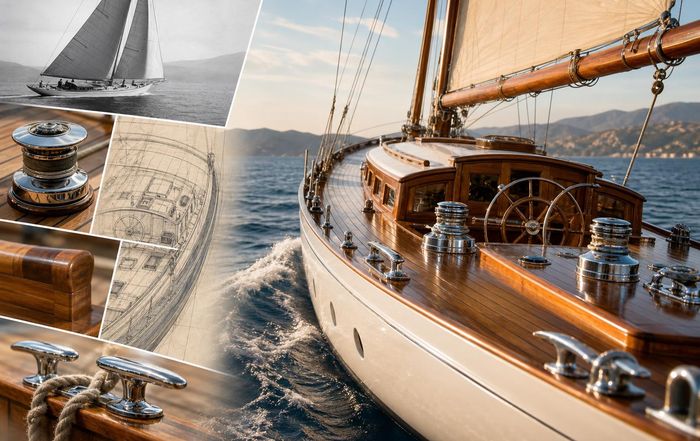
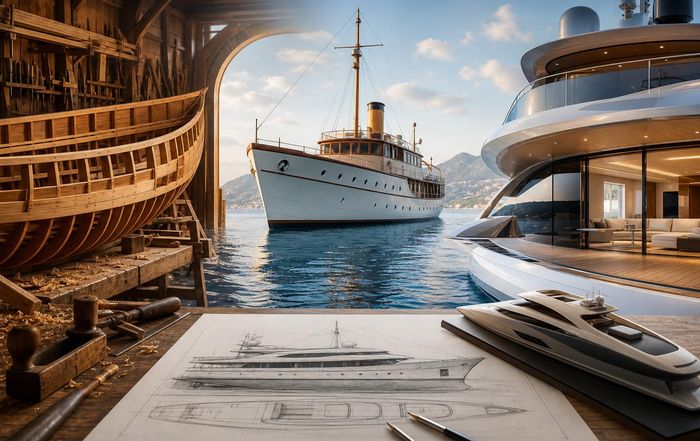
Historic Yacht Design Features Still Used Today

Last updated by Editorial team at yacht-review.com on Monday 24 August 2026
Article Image for Historic Yacht Design Features Still Used Today

Historic Yacht Design Features Still Used Today

Yachting is often portrayed as an arena of constant innovation, yet many of the features that define contemporary yachts have roots stretching back centuries. From hull forms and rig configurations to interior layouts and even lifestyle expectations on board, today's owners and designers draw heavily on a long lineage of maritime experimentation and craftsmanship. For the water-focused readers of yacht-review, understanding these enduring design elements is not only a matter of historical curiosity; it is central to making informed decisions about investment, refit, charter positioning, and long-term value.

This article explores key historic yacht design features that continue to shape modern vessels, examining how they have evolved, why they persist, and how they are being reinterpreted for a new era of performance, comfort, and sustainability.

From Working Sail to Luxury Yacht: Hull Forms That Endure

Long before the word "superyacht" existed, naval architects were solving the same fundamental problem faced by today's designers: how to move safely and efficiently through the water while carrying people and their belongings in reasonable comfort. Many of the hull forms now associated with leisure craft began life as working or naval vessels.

The long, fine entry and overhanging bow that became iconic in classic racing yachts of the late nineteenth and early twentieth centuries can be traced to fast naval and pilot cutters, which needed to perform in rough conditions while maintaining speed. The celebrated J-Class yachts of the 1930s, immortalised by the America's Cup and documented in detail by organisations such as the J Class Association, refined these principles into a visually dramatic and hydrodynamically efficient package. Their long overhangs increased waterline length when heeled, effectively providing more speed potential under sail while preserving elegant proportions at rest.

Modern performance cruisers and racer-cruisers still echo these lines, even when built in advanced composites. Many owners continue to favour a relatively fine bow and balanced overhangs for their combination of aesthetic appeal and seakeeping behaviour, particularly in upwind conditions. While plumb bows and broad sterns dominate the most aggressive racing classes, a significant segment of the premium cruising market still gravitates toward hull shapes that feel reassuringly "classic" underway, and this preference is frequently reflected in the projects covered in our own yacht reviews.

Equally enduring is the deep, ballasted keel. The principle of a weighted appendage providing righting moment has changed less in concept than in execution. Traditional full-keel yachts, common on bluewater cruisers and classic designs, offered directional stability and protection for the rudder and running gear, features still prized by ocean-going sailors today. Modern fin keels with bulbs or wings are more efficient and lighter, yet the fundamental idea-using low-placed weight to resist heeling and improve stability-remains identical to that of nineteenth-century sailing ships. Classification societies such as Lloyd's Register and DNV continue to develop rules that build on this long heritage of stability analysis, reflecting the deep continuity between historic practice and contemporary safety standards.

Rigs and Sail Plans: Classic Solutions to Modern Demands

The sight of a modern ketch or schooner slipping into a Mediterranean anchorage may feel like a romantic throwback, but these rigs survive because they solve practical problems as effectively today as they did a century ago. Dividing sail area among multiple masts reduces individual sail size, making sail handling easier for smaller crews and enabling more flexible sail combinations across a wider range of conditions.

Historic schooners, which emerged in the eighteenth century and became widely used in North America and Europe, were prized for their ability to sail close to the wind and their efficient use of fore-and-aft sails. Contemporary luxury schooners, including several high-profile custom builds documented by Royal Huisman and Perini Navi, retain the same fundamental geometry while integrating modern materials such as carbon masts, high-modulus rigging, and advanced sail fabrics. Readers can explore how such traditional rigs are interpreted aboard modern cruising yachts in our cruising features, where the balance between heritage and innovation is often a central theme.

The ubiquitous sloop rig also has deep historical roots. As early as the eighteenth century, sloops were valued for simplicity and performance, and by the late nineteenth century they had become dominant in competitive yachting. Today's fractional rigs, self-tacking jibs, and large mainsails are evolutionary rather than revolutionary steps from these origins, optimising the same basic configuration for ease of handling and better aerodynamic efficiency. The prevalence of the Bermuda rig, which largely displaced gaff rigs in the early twentieth century, exemplifies how a single historic design shift continues to define the silhouette of most modern sailing yachts.

Deck Layouts: From Workspaces to Social Stages

Historic sailing ships and early yachts were working platforms first and leisure spaces second, yet many of their functional arrangements remain visible on contemporary decks. The concept of a raised quarterdeck, for example, provided officers with a commanding view and a relatively dry position aft; today, many sailing superyachts and motoryachts adopt raised aft decks or split-level cockpits that serve as protected outdoor lounges while preserving line of sight for helmsmen and crew.

The classic centre-cockpit sailing yacht, which became popular in the twentieth century for bluewater cruising, is itself an adaptation of historic working layouts in which a sheltered command area was placed near the middle of the vessel for comfort and security. Modern centre-cockpit cruisers continue to appeal to owners who prize a dry, secure helm position and separation between social spaces and sailing operations, particularly on long passages. Readers interested in how different deck arrangements influence cruising comfort can explore further through our dedicated boats section, where layout decisions are often evaluated in the context of real-world use.

Teak decks are another enduring legacy. Historically, teak was adopted for its resistance to rot, non-slip properties when wet, and relative ease of maintenance. These qualities remain attractive, and teak has become an aesthetic hallmark of luxury yachting. However, increased awareness of environmental and ethical concerns surrounding tropical hardwoods has spurred the adoption of alternatives such as synthetic teak, modified woods, and cork-based products. Organisations including the World Wildlife Fund and certification bodies such as the Forest Stewardship Council have highlighted the importance of responsible sourcing, and many leading yards now offer verified or alternative decking solutions. The visual language of the teak deck remains, but the material reality is gradually evolving in response to sustainability imperatives.

Interior Layouts: Time-Tested Spatial Logic

While materials and styling have changed dramatically, the core spatial logic of yacht interiors has altered less than some might assume. The separation of crew and guest areas, the positioning of galleys and navigation stations, and the distribution of cabins along the hull all reflect principles that can be traced back to classic ocean-going vessels.

In traditional sailing ships and early steam yachts, the after part of the vessel was generally reserved for the owner and officers, offering a quieter, more comfortable motion, while crew were housed forward. Many modern motor and sailing yachts maintain this aft-focused arrangement for owners' suites and main salons, with guest cabins amidships and crew quarters forward or in the bow, thereby preserving a hierarchy of comfort and privacy that has proved functionally effective over generations. This arrangement also aligns with modern weight-distribution and noise-management strategies, as naval architects strive to isolate guest spaces from machinery and anchor-handling operations.

The linear galley along one side of the hull, familiar from countless production cruising yachts, descends from the need to create secure working spaces for food preparation on a moving platform. Classic bluewater designs placed galleys close to the vessel's centre of motion and provided extensive handholds and bracing points. Contemporary galleys may be more open and integrated into saloons, but many still respect the same fundamental requirement for safe, ergonomic operation at sea.

Readers seeking deeper insight into how interior layouts have evolved in parallel with lifestyle expectations can find numerous case studies within our design coverage, where naval architects and interior designers often discuss the tension between tradition and innovation.

Classic Aesthetics in a Contemporary Market

The enduring commercial appeal of "classic" lines is one of the most striking continuities in yacht design. Long overhangs, sheerlines with gentle spring, varnished brightwork, and traditional coachroof shapes continue to command strong interest, particularly in the premium and custom segments. Shipyards such as Feadship, Royal Huisman, and Spirit Yachts have built reputations on blending modern engineering with nostalgic aesthetics, demonstrating that heritage can be a powerful differentiator in a competitive global market.

The popularity of retro-inspired motoryachts, often described as "gentleman's yachts" or "lobster boats," reflects the same sentiment. Many of these designs draw heavily from mid-twentieth-century commuter yachts and working lobster boats from New England, combining flared bows, tumblehome sterns, and sweeping sheerlines with contemporary propulsion and electronics. Publications including Boat International and Yachting World regularly highlight such vessels, noting that owners often perceive them as timeless and less vulnerable to fashion cycles than aggressively modern designs.

From a business perspective, yachts that successfully integrate classic aesthetics with up-to-date systems and compliance standards can enjoy strong residual values and broad charter appeal. For charter operators and brokers, positioning a vessel as a "modern classic" can help differentiate it in crowded markets such as the Mediterranean and Caribbean, where many guests seek an experience that feels both luxurious and authentic. Our lifestyle features frequently explore how this blend of heritage and modern comfort shapes on-board experiences, from formal dining rooms reminiscent of early twentieth-century steam yachts to libraries and observation lounges that evoke an era of grand ocean voyages.

Propulsion and Systems: Old Ideas, New Technologies

Although contemporary yachts increasingly rely on advanced propulsion technologies, many of the underlying concepts predate the leisure yachting industry by decades. The transition from sail to auxiliary engines in the late nineteenth and early twentieth centuries established patterns that still define modern motor-sailers and long-range cruisers. Early auxiliary engines were installed primarily for manoeuvring and calm-weather passages, and even today, many bluewater sailors view engines as tools for reliability and safety rather than as replacements for sail.

The long-range displacement motor yacht, a staple of expedition and explorer segments, owes much to the design of commercial trawlers and naval patrol vessels. Deep, efficient hulls optimised for moderate speeds, generous fuel capacity, and robust engine rooms are all direct descendants of working craft that needed to operate economically over long distances. Contemporary explorer yachts, such as those documented by Damen Yachting and Nordhavn, refine these characteristics with stabilisation systems, hybrid propulsion options, and advanced navigation suites, but the underlying philosophy remains consistent with historic ocean-going workboats.

On the systems side, principles of redundancy, compartmentalisation, and watertight integrity that were codified in early twentieth-century maritime regulations continue to underpin modern yacht engineering. Bodies such as the International Maritime Organization and classification societies have progressively updated standards, yet the basic approach-multiple independent systems, watertight bulkheads, and carefully managed weight distribution-reflects lessons learned from historic incidents and long-standing naval practice.

Seamanship, Safety, and the Human Element

Historic yacht design features cannot be fully understood without considering the seamanship traditions that shaped them. Many design decisions that persist today were originally driven by safety and practicality, and they continue to influence how crews operate modern yachts.

High bulwarks and substantial guardrails, for instance, have long been used to protect crew on working decks, particularly in heavy weather. Modern yachts often combine these traditional safety measures with recessed walkways and integrated handholds, yet the core idea-providing physical barriers and secure pathways-remains unchanged. Similarly, the positioning of winches, cleats, and fairleads along side decks often follows patterns established on classic sailing vessels, where lines needed to run cleanly and predictably under load.

The enduring importance of proper lookout positions, sheltered helm stations, and clear sightlines also reflects centuries of accumulated seamanship. Even the most advanced helm consoles and flybridges are laid out with reference to these long-standing principles, ensuring that captains can maintain situational awareness in a variety of conditions. Industry organisations such as the Royal Yachting Association and American Boat and Yacht Council continue to promote best practices that are deeply rooted in historic maritime experience, reinforcing the connection between traditional design and modern safety culture.

For those interested in how these seamanship-driven design elements contribute to real-world cruising experiences, our travel features often highlight the practical implications of layout and equipment choices when yachts venture beyond familiar waters.

Heritage as a Strategic Asset in the Yacht Business

In the contemporary yacht market, heritage is more than an aesthetic preference; it is a strategic asset. Owners, charter guests, and investors increasingly value authenticity, narrative, and craftsmanship, and historic design features provide a tangible link to these qualities. Shipyards and brands that can trace their design DNA to iconic vessels or long-standing traditions often enjoy a competitive advantage, particularly in high-end segments where differentiation is critical.

Classic and neo-classic yachts also play a significant role in events and regattas, where historic design features are central to the experience. Regattas dedicated to classic yachts in regions such as the Mediterranean, the Caribbean, and New England attract owners who appreciate both the sailing qualities and the cultural cachet of older designs. Coverage in outlets like Classic Boat and international yachting media reinforces the perception that traditional features are not merely nostalgic, but actively relevant to contemporary yachting culture.

From a business perspective, understanding which historic features resonate with current buyers can inform new-build specifications, refit priorities, and marketing strategies. For example, retaining or reintroducing classic deckhouses, porthole shapes, or sheerlines can significantly influence a yacht's perceived character and market positioning, even when the underlying structure, systems, and compliance standards are entirely modern. Our readers can explore the commercial implications of such decisions in greater depth in the business section of yacht-review.com, where market trends and investment considerations are analysed through a design-conscious lens.

Sustainability: Old Wisdom for New Challenges

As the yachting industry confronts the environmental and regulatory challenges of the coming decades, many of the most promising solutions draw on historic design wisdom. Efficient hull forms, reliance on wind power, and careful management of weight and resources were once matters of survival for long-distance mariners; today, they are increasingly recognised as pathways to reduced emissions and more responsible operation.

The resurgence of interest in performance cruising catamarans and trimarans, for instance, reflects an appreciation of multihull efficiency that has roots in traditional Pacific and Asian sailing craft. Lightweight, easily driven hulls require less propulsion power, whether under sail or engine, and can therefore play a role in reducing fuel consumption. Similarly, the renewed emphasis on sailing performance in some contemporary superyachts-encouraged by advances in sail-handling technology-reconnects with the historic reality that wind is a free and renewable energy source.

Material choices also illustrate the interplay between tradition and sustainability. While advanced composites and alloys dominate modern construction, there is growing interest in responsibly sourced timber, recyclable cores, and alternative decking materials. Initiatives by organisations such as the Water Revolution Foundation and various industry coalitions aim to accelerate sustainable practices, yet many of the underlying principles-build light but strong, minimise waste, and design for longevity-would be familiar to master shipwrights of previous centuries.

Readers seeking a deeper exploration of how heritage design principles intersect with environmental responsibility can refer to our dedicated sustainability coverage, where traditional wisdom and modern technology are frequently analysed side by side.

Continuity, Innovation, and the Future of Yacht Design

The persistence of historic yacht design features in contemporary practice is not a sign of stagnation; rather, it reflects the cumulative nature of maritime knowledge. Successful solutions tend to endure, even as materials, regulations, and owner expectations evolve around them. In an industry where safety, comfort, and performance are non-negotiable, designers are understandably cautious about discarding proven ideas without compelling reasons.

At the same time, innovation continues to reshape the context in which these historic features operate. Digital design tools, computational fluid dynamics, and advanced manufacturing techniques allow naval architects to refine traditional forms with unprecedented precision. Hybrid propulsion, energy recovery systems, and smart onboard management platforms are transforming how yachts are operated and maintained, even when their silhouettes evoke the golden age of sail or early motor yachting.

For the often daily returning sailing community here, the key takeaway is that a deep appreciation of historic design features is not merely an academic exercise; it is a practical asset in evaluating new builds, assessing refit opportunities, and understanding long-term value. Whether an owner is drawn to the sweeping sheer of a classic ketch, the purposeful stance of a trawler-style explorer, or the understated elegance of a retro commuter yacht, the features that attract them are part of a long and evolving story.

By recognising how these elements have proven themselves over time, industry professionals and enthusiasts alike can make more informed, confident decisions-balancing heritage and innovation to create yachts that are not only beautiful and capable today, but also enduringly relevant in the decades to come. For ongoing analysis of how this balance plays out across new launches, refits, and market trends, readers are invited to follow the latest updates in our news section and broader coverage at yacht-review.com.

How Classic Boatbuilding Shaped Modern Yachts

Last updated by Editorial team at yacht-review.com on Sunday 23 August 2026
Article Image for How Classic Boatbuilding Shaped Modern Yachts

How Classic Boatbuilding Shaped Modern Yachts

The modern yacht, with its sculpted hull, hybrid propulsion and digitally orchestrated systems, appears at first glance to inhabit a completely different world from the clinker-built fishing boats and long-range wooden cruisers of the last century. Yet every passage made aboard a contemporary superyacht, dayboat or bluewater cruiser is still underwritten by ideas, proportions, materials and craftsmanlike disciplines that emerged long before composite tooling and computational fluid dynamics. For readers sailing here daily, understanding how classic boatbuilding shaped today's yachts is not an exercise in nostalgia; it is a way to read the lines of a hull, to appreciate the thinking behind a design decision and to see where innovation is most likely to emerge next.

From Working Craft to Pleasure Yacht

Modern yachting evolved from working sail and early leisure craft whose forms were dictated by trade routes, local materials and the demands of safety at sea. The sleek lines of nineteenth-century pilot cutters, fishing smacks and trading schooners, documented extensively by institutions such as the National Maritime Museum in the United Kingdom, provided the first templates for fast, seaworthy hulls that could be adapted to private ownership. Early British and American yachts were often direct conversions or close derivatives of these working boats, preserving deep keels, generous sail plans and robust scantlings that could withstand harsh conditions.

As competitive sailing developed, particularly through events such as the America's Cup, designers began to refine these traditional forms to extract more speed while maintaining seaworthiness. The famous cutters and schooners of the late nineteenth and early twentieth centuries, described in detail by the Herreshoff Marine Museum, illustrate a transitional moment when empirical boatbuilding knowledge met increasingly formalized naval architecture. The long overhangs, narrow beam-to-length ratios and deep, lead-ballasted keels of these yachts set patterns that still influence performance-oriented designs today, even as materials and construction methods have changed dramatically.

The migration from working boat to pleasure yacht also transformed interior expectations. Where once cargo holds and fish wells dominated the midships volume, owners began to demand saloons, cabins and galleys that allowed for longer, more comfortable cruises. Many of the spatial hierarchies visible in modern yachts-owner's suite aft or forward, crew quarters separated from guest areas, dedicated chart tables and sheltered cockpits-can be traced to these early adaptations, which balanced traditional seakeeping with emerging notions of maritime leisure. Contemporary yacht interior concepts featured on yacht-review.com in top recommended sections such as design and lifestyle still echo these early arrangements, albeit with far more sophisticated materials and systems.

Craft Traditions: Joinery, Fairing and the Human Hand

Classic boatbuilding was defined as much by craftsmanship as by hull form. The disciplines of lofting, planking, framing and joinery that dominated wooden boat construction established quality benchmarks that still shape expectations in the composite era. Shipwrights working in oak, mahogany, teak and cedar developed techniques for fairing hulls by eye and by batten, for steam-bending frames and for fitting complex joinery with minimal tolerance for error. These skills, documented in traditional boatbuilding manuals and preserved in training programs at places such as The WoodenBoat School and the International Yacht Restoration School (IYRS), form the cultural and practical bedrock of modern yacht construction.

Even in the largest composite superyacht shipyards today, where computer-controlled cutting machines and precision molds dominate structural work, the final impression of quality depends heavily on traditional crafts. High-end joinery, hand-faired hulls and meticulously finished interiors continue to be defining markers of excellence. Many leading builders, including Feadship, Royal Huisman and Perini Navi, explicitly emphasize the continuity between their historic wooden or steel craftsmanship and present-day composite or aluminum production, arguing that the human eye and hand remain irreplaceable in delivering a yacht that feels coherent and refined.

This continuity is particularly evident in custom and semi-custom yachts, where owners seek individualized layouts and bespoke materials. The classic shipwright's ability to solve spatial problems in three dimensions, to integrate structure and aesthetic seamlessly and to anticipate the movement and use of a space in heavy weather, continues to inform the way modern interior designers collaborate with naval architects. For readers exploring recent launches in our positive reviews section, the most successful projects tend to be those where advanced engineering is complemented by this inherited sensitivity to proportion, joinery and ergonomics.

Hull Forms: From Displacement Heritage to Hybrid Thinking

The most visible legacy of classic boatbuilding lies in hull form. Traditional long-keeled displacement hulls, developed for stability and cargo capacity, provided the foundation for early cruising yachts and still influence many bluewater designs favored by long-distance sailors. The soft bilges, fine entries and full keels of traditional cruisers offer forgiving motion in a seaway and good directional stability, qualities that remain important for ocean passages despite the rise of fin keels and spade rudders in performance-oriented craft.

Advances in hydrodynamics and tank testing through the twentieth century, exemplified by the work of designers such as William Fife, Olin Stephens and Jack Laurent Giles, gradually shifted the balance toward more efficient hulls with reduced wetted surface and better speed potential. The evolution from full keels to fin keels with separate rudders, and later to bulb keels and winglets, can be traced through racing classes and rating rules that incentivized specific shapes. Yet even the most radical modern foiling monohull, as seen in recent America's Cup cycles, still inherits fundamental principles from classic naval architecture regarding stability, center of effort and balance.

Contemporary yacht design increasingly blends displacement heritage with planing and semi-displacement concepts, particularly in motor yachts. The deep-V hulls pioneered by designers such as Ray Hunt, whose work is chronicled by Professional BoatBuilder and other industry sources, drew on an understanding of seakeeping learned from traditional seagoing craft while introducing new deadrise geometries optimized for higher speeds. Many current fast cruisers and explorer yachts adopt hybrid forms that combine fine forward sections for soft entry with fuller aft sections for load-carrying and planing efficiency, reflecting a long lineage of experimentation that began with wooden hulls and empirical testing.

For readers interested in how these hull evolutions translate into real-world cruising experiences, our cruising coverage frequently highlights yachts that successfully reconcile traditional seakeeping expectations with contemporary performance and comfort. The best examples demonstrate that classic hull wisdom remains highly relevant, even as computational tools refine shapes to a degree unimaginable to earlier generations.

Materials: From Wood and Metal to Advanced Composites

The shift from wood to steel, aluminum and composites is often presented as a clean break, but in practice modern yacht materials evolved through a series of incremental steps that preserved many classic construction logics. Early steel and aluminum yachts adopted framing and plating patterns that mirrored wooden frames and planking, with longitudinal stringers and transverse frames echoing timber ribs. The basic concept of a strong, continuous backbone, transverse reinforcement and carefully distributed longitudinal stiffness remains central to structural design, even when executed in carbon fiber or advanced sandwich laminates.

Wood itself has not disappeared from the forefront of yacht technology. Cold-molded and laminated timber construction, which gained prominence in the mid-twentieth century, uses multiple thin layers of wood bonded with modern resins to create strong, lightweight hulls with excellent fatigue resistance and vibration damping. Leading custom yards and classic restorers continue to employ these techniques, often combining them with carbon reinforcements and epoxy systems to meet contemporary performance and regulatory requirements. Organizations such as RINA and Lloyd's Register provide classification frameworks that integrate these hybrid methods into recognized standards, demonstrating how traditional materials can coexist with rigorous modern engineering.

Composite yacht construction, now dominant in production sailing and motor yachts, owes much to the understanding of load paths, stiffness and weight distribution developed in wooden and metal boats. The placement of bulkheads, stringers and frames in a fiberglass or carbon hull still reflects decades of experience in how forces travel through a vessel in heavy weather, grounding scenarios or high-speed maneuvers. Modern infusion and prepreg techniques improve consistency and reduce weight, but they are deployed according to structural philosophies refined over generations of classic boatbuilding.

In parallel, the aesthetic and tactile qualities of traditional materials remain highly valued. Teak decks, hardwood veneers and solid timber elements continue to define the sensory experience of luxury yachts, even as synthetic alternatives and engineered woods gain ground for sustainability and maintenance reasons. Readers interested in material trends and their environmental implications can explore further in our expert sustainability and technology sections, where classic and modern approaches are frequently compared in terms of lifecycle impact and performance.

Design Language: Classic Lines in Contemporary Form

Beyond structure and performance, classic boatbuilding has left an enduring imprint on yacht aesthetics. The sheerline, overhangs, deckhouse proportions and detailing that define a yacht's character often draw directly from historical precedents. Many contemporary designers consciously reference the work of earlier masters, incorporating elements such as tumblehome, flared bows, varnished brightwork and subtly cambered decks to evoke heritage while integrating large windows, beach clubs and modern amenities.

The enduring appeal of "modern classic" yachts, exemplified by projects from builders such as Spirit Yachts, Hoek Design and Royal Huisman, underscores the strength of this design language. These yachts typically combine traditional long overhangs, low coachroofs and generous sail plans with carbon spars, advanced rigging and state-of-the-art navigation systems. Industry coverage by outlets like Boat International and Yachting World regularly highlights such projects as evidence that owners continue to value the romance of classic lines, provided they are supported by contemporary performance and comfort.

Interior design has also absorbed lessons from classic yachts, particularly in the use of symmetry, proportion and sightlines to create a sense of calm and order at sea. Traditional layouts often placed key living spaces close to the vessel's center of motion, minimizing discomfort underway, and used built-in furniture to maximize storage and safety. These principles remain highly relevant, even as open-plan concepts and large glazing areas become more common. The best modern interiors, many of which feature in yacht-review.com boats and global coverage, balance contemporary styling with these timeless seagoing considerations.

Seakeeping, Safety and Classification: Inherited Discipline

Classic boatbuilding developed in an environment where failure at sea could be catastrophic, and this reality instilled a conservative, safety-first mindset that continues to influence modern yacht design and regulation. Traditional rules of thumb regarding freeboard, reserve buoyancy, scantlings and rig proportions were based on hard experience, and although they have been refined by formal stability criteria and classification rules, their underlying logic remains intact.

Today's yachts must comply with increasingly sophisticated international standards, including those overseen by the International Maritime Organization (IMO), the International Organization for Standardization (ISO) and various flag-state and classification society requirements. These frameworks, while rooted in contemporary engineering and risk analysis, are in many respects codifications of lessons learned from classic vessels. The requirement for watertight subdivision, adequate stability in damaged conditions, robust liferaft and firefighting provisions and reliable emergency steering all reflect a continuity of concern for survivability at sea.

The emphasis on seakeeping-how a vessel behaves in waves, wind and current-also draws heavily on classic practice. Designers still evaluate pitching, rolling and slamming characteristics in light of real-world experiences accumulated over generations, even as computational tools and model testing add precision. Long-range explorer yachts and bluewater cruisers in particular often prioritize seakeeping attributes associated with traditional hulls, such as deep forefoots, moderate beam and relatively low vertical centers of gravity, recognizing that crew endurance and comfort can be as critical as raw speed.

Readers interested in the business implications of these safety and regulatory frameworks can find additional analysis in our business and news sections, where the cost and complexity of compliance are frequently discussed in relation to newbuild and refit projects worldwide.

Heritage, Restoration and the Living Fleet

One of the most tangible ways classic boatbuilding shapes modern yachting is through the active preservation and use of historic yachts. Major regattas such as the Les Voiles de Saint-Tropez, the Panerai Classic Yachts Challenge (in its various iterations) and events organized by bodies like the International Mediterranean Committee (CIM) bring together fleets of restored wooden yachts that continue to sail competitively and cruise extensively. These events, covered by specialist media and supported by dedicated owners and craftsmen, serve as open-air laboratories where classic design and construction are tested against contemporary expectations.

Restoration projects often require a deep understanding of original building methods, combined with selective integration of modern systems and safety features. Leading restoration yards in Europe and North America work closely with classification societies and heritage organizations to balance authenticity with compliance, sometimes utilizing advanced scanning and modeling tools to recreate or repair complex structures. The methodologies developed in this context-such as non-destructive testing of timber, reversible interventions and hybrid material solutions-frequently inform best practices in refit and lifecycle management of modern yachts as well.

For many owners, involvement with classic yachts is not only a passion project but also a way to influence contemporary design. Insights gained from sailing or restoring a vintage cutter, ketch or schooner often translate into specific requests when commissioning new builds, whether in the form of deck layouts that favor manual sail handling, interior atmospheres that reference traditional craftsmanship or hull shapes that prioritize motion comfort. The dialogue between classic and modern fleets, which yacht-review.com follows closely in its history and events coverage, ensures that lessons from the past remain actively integrated into present and future projects.

Sustainability: Old Wisdom for New Challenges

As the yachting industry faces increasing scrutiny over environmental impact, classic boatbuilding offers both inspiration and practical insights. Traditional vessels were inherently low-carbon in operation, relying on wind power and manual systems, and were built from renewable or recyclable materials such as timber and metal. While simply reverting to historical technologies is neither realistic nor sufficient, the principles underlying classic practice-efficiency, durability, reparability and respect for natural forces-are increasingly relevant to modern sustainability efforts.

Organizations such as the Water Revolution Foundation and research initiatives documented by The Superyacht Life Foundation highlight how design for efficiency, including optimized hull forms and hybrid propulsion, can significantly reduce fuel consumption and emissions. Many of these efficiency strategies echo classic priorities, such as favoring moderate speeds, clean underwater shapes and balanced sail plans. Likewise, the renewed interest in alternative materials, from sustainably sourced timber to bio-based resins, reflects a desire to combine modern performance with the lower environmental footprint associated with traditional boatbuilding.

Lifecycle thinking, a concept widely discussed in sustainable design literature and on platforms such as the Ellen MacArthur Foundation, has clear parallels in the way classic yachts were built to be maintained, refitted and passed down through generations. The high survival rate of well-constructed wooden and steel yachts, many of which remain in active service after decades, suggests that longevity and reparability can be powerful sustainability strategies. Modern custom and semi-custom builders increasingly emphasize the design of yachts that can be upgraded over time rather than replaced, drawing implicitly on this heritage.

Readers seeking deeper analysis of these issues can explore our dedicated sustainability content, where classic and modern approaches are examined side by side, and where case studies of efficient cruising, alternative fuels and material innovation are contextualized within the broader history of yacht development.

Technology and the Human Element: Balancing Innovation and Seamanship

Advanced technology now permeates every aspect of yacht design and operation, from integrated bridge systems and dynamic positioning to automated sail handling and onboard connectivity. Yet the successful integration of technology still depends heavily on classic seamanship principles and the experiential knowledge accumulated by generations of sailors and builders. Autopilots, for example, are tuned according to an understanding of a yacht's natural steering characteristics, while load sensors and rig monitoring systems are interpreted in light of long-standing rules of thumb regarding sail trim and rig tension.

Modern classification and training frameworks, including those overseen by the Maritime and Coastguard Agency (MCA) and professional bodies such as the Professional Yachting Association (PYA), build on this seamanship heritage by formalizing competencies and procedures. At the same time, many owners and captains continue to value manual redundancy and traditional skills, insisting on the ability to hand-steer, manually reef sails and operate essential systems without full reliance on automation. This reflects a recognition that while technology can enhance safety and convenience, the underlying disciplines of navigation, watchkeeping and maintenance remain rooted in classic practice.

For yacht-review.com, which regularly covers innovations in our technology and news sections, the most compelling stories are often those where cutting-edge systems are deployed in a way that respects and amplifies, rather than replaces, the human element. Whether in the context of long-range cruising, regatta performance or family-oriented coastal cruising, the yachts that inspire most confidence are those where modern tools are framed as extensions of a robust seamanship culture that traces back to classic boatbuilding.

A Living Legacy for the Next Generation of Yachts

Classic boatbuilding is not simply a chapter in maritime history; it is a living legacy that continues to shape the yachts being launched today and the expectations of owners, crew and designers worldwide. From the curvature of a sheerline and the warmth of a hand-finished interior to the seakeeping behavior of a hull in heavy weather and the structural logic of a composite laminate, traces of traditional knowledge are everywhere in modern yacht design and construction.

As the industry grapples with new challenges-environmental regulation, evolving owner demographics, rapidly advancing digital technologies and shifting global cruising patterns-the most successful responses are likely to be those that integrate innovation with respect for this heritage. Classic boatbuilding reminds the sector that yachts are not merely technical objects or status symbols; they are vessels designed to move safely and gracefully through a powerful and unpredictable environment, to host human experiences that depend as much on trust and comfort as on performance metrics.

For our daily updated community audience at Yacht Review, whether exploring new designs in boats, planning itineraries in travel or following developments in the global market through business, an appreciation of classic boatbuilding provides a valuable lens through which to evaluate contemporary offerings. It enables more informed conversations with designers and builders, more nuanced assessments of value and longevity, and a deeper sense of connection to the enduring traditions that make yachting such a distinctive and rewarding domain.

In this way, the influence of classic boatbuilding on modern yachts is not merely historical or stylistic; it is foundational. It shapes how yachts are conceived, built, sailed and experienced, ensuring that even as materials, systems and aesthetics continue to evolve, the core values of seaworthiness, craftsmanship and thoughtful design remain firmly anchored in a rich and instructive past.

Maritime Traditions That Influence Yacht Design

Last updated by Editorial team at yacht-review.com on Saturday 22 August 2026
Article Image for Maritime Traditions That Influence Yacht Design

Maritime Traditions That Influence Yacht Design

Yacht design may appear to be a thoroughly modern discipline shaped by advanced composites, computational fluid dynamics and hybrid propulsion, yet much of what defines contemporary superyachts and premium production boats is rooted in centuries of maritime tradition. From the sheer line of a classic sailing yacht to the ceremonial role of the owner's suite, yacht designers continue to draw on a deep cultural and technical heritage that extends back to working fishing vessels, naval warships and the great age of sail.

For wave hardened community readers here, this interplay between history and innovation is more than a curiosity; it is a framework for understanding why yachts look, feel and behave the way they do, and why certain design cues remain so enduringly powerful in the marketplace. This article explores the principal maritime traditions that still shape yacht design, how leading builders interpret them today, and why these influences continue to resonate with owners, charter guests and crews around the world.

From Working Hulls to Luxury Platforms

Long before the modern yacht emerged as a dedicated leisure craft, boatbuilders in Northern Europe, the Mediterranean and Asia were optimising hull forms for trade, fishing, exploration and warfare. Contemporary naval architects still study these precedents because they represent solutions refined over generations of trial and error.

The sharp, wave-piercing bows and fine entries of Viking longships, for example, have informed the thinking behind many fast displacement and semi-displacement hulls. Modern hydrodynamic research from institutions such as Delft University of Technology and the U.S. Naval Academy confirms that slender hulls with carefully controlled prismatic coefficients can deliver efficient performance at a range of speeds, an insight that echoes the logic of long, narrow traditional craft.

Similarly, the beamy, load-carrying hulls of North Sea trawlers and Dutch barges, designed for stability and capacity rather than speed, have influenced the contemporary explorer yacht segment. Many expedition yachts borrow from these commercial working vessels, adopting high freeboard, a robust bow and a relatively full midship section to achieve long-range autonomy and sea-kindliness. When Yacht Review examines long-range cruisers in its dedicated cruising coverage, the lineage from commercial seafaring to private exploration is often clearly visible in both profile and performance.

This continuity is not nostalgic; it is pragmatic. Naval architects frequently reference proven traditional forms when developing new designs, then validate and refine them using tank testing and computational tools. In this way, maritime traditions become a starting point for innovation rather than a constraint.

The Enduring Power of the Sheer Line

Among the most recognisable traditional influences on yacht design is the sheer line, the subtle longitudinal curve of the deck when viewed from the side. Historically, sheer was not only aesthetic; it contributed to reserve buoyancy and helped working sailing vessels shed water in heavy seas. Today, sheer remains one of the primary visual signatures of a yacht and a key differentiator between design philosophies.

Classic sailing yachts and many modern motoryachts retain a pronounced sheer, rising towards the bow and sometimes the stern, evoking the elegance of early twentieth-century racing yachts and naval vessels. This curve can make a yacht appear longer, lower and more purposeful, and it often resonates strongly with owners who appreciate continuity with maritime heritage. Designers interviewed by Boat International and Superyacht Times frequently describe the sheer line as the "spine" of the exterior profile, around which other elements are composed.

At the same time, some contemporary designs, particularly in the high-volume production segment, adopt a straighter sheer to maximise internal space and simplify construction. The ongoing dialogue between a romantic, curved sheer and a more rectilinear, architecture-driven profile reflects a broader tension between tradition and modernity in yacht design. For discerning readers who follow our design features, understanding this vocabulary of lines and proportions provides a more nuanced lens through which to evaluate new launches.

Naval Heritage and the Language of Authority

Yacht design also inherits much from naval and coast guard vessels, not only in terms of technology but also in visual language. High, flared bows, vertical or near-vertical stems, and purposeful superstructures have long been associated with seakeeping and authority at sea. Many contemporary explorer and support yachts intentionally echo the aesthetic of patrol boats or small warships, signalling capability and seriousness of intent.

This influence is not purely stylistic. The flared bow, for instance, has deep roots in naval architecture, where it helps deflect spray and improve dryness on deck in rough conditions. Modern yachts that prioritise offshore passages and remote cruising often adopt pronounced bow flare and robust foredeck structures, translating a practical naval solution into the luxury sphere. Resources from Lloyd's Register and DNV show how classification standards for seagoing vessels, many developed for commercial and naval ships, now guide structural and safety requirements in the superyacht sector.

Traditional naval layout concepts also persist. The clear separation between command spaces, crew working areas and guest domains mirrors historical distinctions between bridge, working deck and officers' quarters. On many large yachts, the wheelhouse still occupies a commanding position with near-360-degree visibility, echoing the bridge of a naval vessel. Below, crew traffic routes are often designed to minimise interference with guest circulation, a principle that can be traced back to the hierarchical organisation of ships of the line and early steamships.

The Legacy of Classic Sailing Yachts

For many in the yachting community, the purest expression of maritime tradition lies in the great sailing yachts of the late nineteenth and early twentieth centuries. The J-Class racers of the 1930s, immortalised in America's Cup history, continue to influence modern performance cruisers and high-end sailing superyachts. Long overhangs, low freeboard, fine entries and powerful sail plans remain aspirational design references, even when today's yachts are built from carbon composites and feature advanced rigging systems.

Contemporary designers often reinterpret these classic proportions to meet current safety regulations, interior volume expectations and stability criteria. The result is a genre of "modern classics" that blend traditional aesthetics with state-of-the-art engineering. Many of these vessels, frequently reviewed in our boats section, showcase varnished brightwork, coved teak decks and subtly flared transoms that pay homage to wooden yacht traditions, even when the underlying structure is aluminium or composite.

Traditional rig configurations also exert a lasting influence. Ketch and schooner rigs, once chosen for their ability to divide sail area into manageable portions for small crews, now appeal to owners seeking versatility, redundancy and a particular silhouette. While sloop rigs dominate performance-oriented designs, the aesthetic and seakeeping advantages of multi-mast configurations ensure that ketches and schooners remain integral to the upper end of the sailing yacht market.

Interior Layouts and the Evolution of Life Afloat

Many aspects of yacht interior design can be traced back to the spatial organisation of historical ships. The concept of an "owner's suite," for example, echoes the captain's cabin or admiral's quarters on naval vessels and the grand staterooms on early ocean liners. These spaces, traditionally located aft where motion is reduced and privacy is enhanced, have inspired the positioning and treatment of owner accommodation on countless modern yachts.

The separation between guest and crew areas also has deep roots in maritime tradition. On commercial and naval ships, officers and enlisted crew had distinct messes and sleeping quarters, often physically segregated to reinforce hierarchy and maintain operational efficiency. Contemporary yachts adapt this logic to create discreet service routes, separate crew staircases and galleys that can function independently of guest social areas. This arrangement supports the high service standards expected in luxury hospitality while preserving the privacy of both guests and crew.

Furthermore, the idea of communal gathering spaces at sea, such as the wardroom or saloon, has evolved into the modern main saloon and sky lounge. These areas, often highlighted in our more detailed yacht reviews, reflect a long-standing maritime culture of shared meals, storytelling and social interaction during extended voyages. Designers still draw on the warmth and intimacy of traditional shipboard interiors, even as they incorporate contemporary materials, large windows and open-plan layouts that respond to current lifestyle preferences.

Craftsmanship, Materials and the Artisanal Tradition

The craftsmanship associated with wooden boatbuilding has a profound symbolic and practical influence on modern yacht design. Even as aluminium, steel and advanced composites dominate hull and superstructure construction, elements such as teak decks, fine joinery and hand-finished details remain central to the perception of quality and authenticity.

Teak, long valued for its durability, grip and resistance to rot, continues to be a defining material on many premium yachts, though its use is being reconsidered in light of sustainability concerns. Traditional deck layouts, with margin boards, king planks and carefully joggled seams, are still reproduced or emulated using synthetic alternatives, preserving the visual language of classic craft. Owners often associate this level of detailing with the heritage of prestigious yards and the continuity of maritime artistry.

The tradition of bespoke, hand-crafted interiors also persists, even as digital design tools and CNC machining streamline production. Many leading yards emphasise their in-house carpentry and finishing teams, positioning them as guardians of a craft lineage that stretches back generations. This emphasis on human skill and continuity aligns with broader luxury trends and reinforces the emotional connection between owners and their yachts. For readers interested in the intersection of heritage and lifestyle, our lifestyle coverage frequently highlights how these artisanal traditions shape the onboard experience.

Rituals, Customs and Symbolism in Design

Beyond physical form and materials, maritime traditions include a rich tapestry of rituals and symbols that subtly influence yacht design and culture. The practice of christening a vessel with a naming ceremony, often accompanied by the breaking of a bottle on the bow, remains common in both commercial and private yachting, reflecting centuries-old beliefs about luck and protection at sea. Designers sometimes incorporate dedicated nameplates, figureheads or decorative motifs that give architectural expression to this ritual significance.

Similarly, the tradition of the ship's bell, historically used for timekeeping and signalling, continues in modern yachts as a ceremonial object and design feature. Many vessels display a polished bell engraved with the yacht's name, often located on the foredeck or near the bridge, blending functional heritage with aesthetic presence. Maritime flags and ensigns, governed by international convention and national law, also shape exterior design, dictating the placement of masts, flagstaffs and light arrangements in accordance with the International Regulations for Preventing Collisions at Sea.

These customs influence not only physical arrangements but also the narrative that owners and builders construct around a yacht. Many design studios consciously weave heraldic elements, personal emblems or historical references into interior detailing, creating a sense of lineage and identity that resonates with the broader maritime story.

Global Traditions and Regional Influences

While much of the yachting world draws heavily on European and North American maritime traditions, global influences are increasingly visible in contemporary design. Traditional dhow construction in the Middle East, for instance, with its sweeping sheer and high stern, has inspired certain exterior styling cues on yachts based in the Gulf region. In Asia, the heritage of junks and fishing vessels informs local interpretations of hull form, deck layout and use of covered outdoor spaces.

The widespread growth of yachting in markets such as China, Southeast Asia and South America is encouraging designers to engage with a broader palette of cultural references. This may manifest in the choice of materials, interior aesthetics or the configuration of social spaces that reflect regional hospitality norms. For readers following the expanding international scene through our global coverage, these developments illustrate how maritime traditions are not static but continually evolving as new cultures participate in yacht ownership and design.

Historical research also plays a role. Institutions such as the National Maritime Museum in Greenwich and the Smithsonian's National Museum of American History preserve extensive collections of ship models, plans and artefacts that inform both scholars and practitioners. Designers often study these archives to better understand proportion, decoration and structural logic in historical vessels, then reinterpret those lessons for contemporary yachts.

Sustainability: Old Wisdom for New Challenges

The push toward sustainability in yachting is often framed as a cutting-edge technological challenge, yet many of the underlying principles have deep roots in traditional seafaring. Historical mariners were acutely aware of resource constraints, designing vessels that could travel long distances using only wind power and minimal stored provisions. Contemporary efforts to reduce fuel consumption, integrate sail-assist systems and optimise hull efficiency echo this earlier ethos of frugality and respect for the marine environment.

Modern hybrid propulsion, waste management systems and energy-efficient hotel loads are being developed and certified under frameworks from organisations such as the International Maritime Organization and class societies, but the philosophical foundation-a desire to live in balance with the ocean-has been part of maritime culture for centuries. Traditional practices such as careful route planning, speed management and preventive maintenance are now being reframed as elements of sustainable operation, reinforcing the idea that responsible yachting is both a technological and cultural endeavour.

Our readers can explore how these themes intersect with design and operations in more detail through the sustainability section, where case studies often show how designers are reinterpreting age-old seafaring wisdom in the context of regulatory requirements and owner expectations.

Technology, Innovation and Respect for Heritage

Contemporary yacht design operates at the intersection of tradition and advanced technology. Computational fluid dynamics, finite element analysis and integrated digital design environments allow naval architects to explore forms and systems that would have been impossible to evaluate using purely empirical methods. Yet many of the baseline assumptions and targets-seaworthiness, comfort, efficiency and aesthetic harmony-remain deeply informed by historical precedents.

Leading technical publications such as Professional BoatBuilder and research shared through The Royal Institution of Naval Architects often highlight this duality, presenting cutting-edge engineering solutions alongside discussions of classic hull forms and time-tested construction methods. The most successful yacht projects tend to be those that respect this continuum, leveraging technology to refine and validate ideas that have stood the test of time rather than pursuing novelty for its own sake.

From the perspective of yacht-review.com, which covers unique developments in marine technology alongside more traditional design topics, this balance is central to understanding where the industry is heading. Owners and charter guests increasingly seek yachts that feel contemporary and environmentally responsible yet still embody the romance and authenticity of the sea. Designers who can navigate this balance, drawing intelligently on maritime traditions while embracing innovation, are well positioned to shape the next generation of iconic yachts.

Tradition as a Strategic Asset in Yacht Business

Maritime traditions do not only influence the physical product; they also shape the business strategies of shipyards, brokers and service providers. Many leading yacht builders emphasise their heritage, sometimes spanning more than a century, as a core component of brand identity. This heritage narrative often references early fishing boats, pilot cutters or military contracts, positioning the yard as a custodian of hard-won seafaring knowledge.

In a competitive global market, the ability to demonstrate continuity with respected maritime traditions can be a powerful differentiator. Clients may perceive such heritage as a proxy for reliability, craftsmanship and long-term support. Brokers and charter companies, in turn, often highlight classic design cues, traditional build quality and the pedigree of naval architects in their marketing materials, appealing to clients who value a connection to the storied history of the sea.

For industry professionals and investors following our business analysis, this underscores the importance of tradition as more than an aesthetic choice; it is a strategic asset that influences brand equity, resale value and client loyalty. The challenge for companies is to ensure that references to maritime heritage are substantiated by genuine expertise and operational excellence, rather than deployed as superficial marketing language.

A Living Heritage: What It Means for Yacht Review Readers?

For the community that gathers around yacht-review.com, whether as owners, aspiring buyers, crew or enthusiasts, understanding the maritime traditions that influence yacht design offers a richer appreciation of the vessels they encounter. When a new motoryacht with a plumb bow and high freeboard appears in our latest news coverage, or when a sailing superyacht with classic overhangs is profiled in a feature, the design choices on display are part of a long conversation between past and present.

This awareness can inform not only aesthetic preferences but also practical decisions about cruising style, onboard lifestyle and long-term ownership. A yacht inspired by robust commercial workboats may be particularly well suited to high-latitude exploration, while a vessel rooted in classic sailing yacht proportions may appeal to those who view yachting as an expression of timeless elegance and seamanship. In both cases, the underlying traditions provide clues about how the yacht will perform, feel and age.

As the industry continues to evolve, incorporating new materials, propulsion technologies and digital systems, the influence of maritime traditions is unlikely to diminish. Instead, these traditions will serve as a compass, guiding designers, builders and owners as they navigate changing expectations, regulatory landscapes and environmental responsibilities. For those who follow our broader focused coverage of travel and cruising destinations, the continuity of maritime culture across regions and generations is part of what makes yachting such a compelling and enduring pursuit.

In this sense, every yacht-whether a compact family cruiser or a large custom superyacht-is both a product of its time and a vessel of accumulated maritime knowledge. By recognising and valuing the traditions that shape yacht design, the yachting community can ensure that progress at sea remains grounded in respect for the skills, experiences and stories that brought the industry to where it is today.

The Evolution of Offshore Cruising Boats

Last updated by Editorial team at yacht-review.com on Friday 21 August 2026
Article Image for The Evolution of Offshore Cruising Boats

The Evolution of Offshore Cruising Boats

Offshore cruising boats have changed more in the past five decades than in the previous century, reshaping what bluewater passagemaking looks like for private owners, professional crews and charter guests alike. From heavy-displacement, full-keel ketches to carbon-infused performance cruisers bristling with electronics, the evolution has been driven by advances in materials, hydrodynamics, safety regulations and, increasingly, environmental expectations. For sea loving people coming here often each day, this story is more than a technical progression; it is a narrative about how design, lifestyle aspirations and global cruising culture have converged to make ocean voyaging safer, more comfortable and more accessible than ever.

From Workboats to Purpose-Built Cruisers

Modern offshore cruising yachts trace much of their lineage to working sail craft and early racing designs. In the first half of the twentieth century, many long-distance passages were made in converted fishing boats, pilot cutters and classic wooden yachts whose robust construction compensated for limited understanding of modern stability and scantling calculations. Naval architects such as William Fife, Olin Stephens of Sparkman & Stephens, and Colin Archer helped define seaworthy hull forms that could survive the North Atlantic, but their boats were often heavy, narrow and relatively slow by contemporary standards.

The post-war boom in recreational boating, particularly in the United States and Western Europe, created demand for yachts designed specifically for private offshore cruising rather than commercial work. Designs like the S&S 34 and the West Sail 32 in the 1960s and 1970s embodied the archetype of the ocean cruiser: thick fiberglass hulls, long keels, modest rigs, and conservative sail plans intended to be forgiving in heavy weather. These boats built reputations for toughness during events such as the early Whitbread Round the World Race, chronicled extensively by organizations such as World Sailing, which today maintains global offshore safety standards and training guidance for bluewater sailors.

As fiberglass construction matured, builders in Europe, North America and later in Asia began to standardize production methods, allowing more sailors to consider extended cruising. What had been the preserve of a small elite gradually opened to a broader audience, laying the foundation for the long-range lifestyle that yacht-review continues to document in its dedicated cruising coverage.

The GRP Revolution and the Rise of Production Cruisers

The widespread adoption of glass-reinforced plastic (GRP) from the 1960s onward marks one of the decisive turning points in the evolution of offshore cruising boats. Fiberglass allowed hulls to be built more quickly and consistently than traditional timber construction, while reducing maintenance and improving resistance to rot and marine organisms. Early GRP hulls were often overbuilt due to conservative engineering assumptions, resulting in very robust but relatively heavy boats.

By the 1980s and 1990s, however, production builders such as Beneteau, Jeanneau, Hallberg-Rassy, Swan (through Nautor Swan) and Bavaria were refining laminate schedules and adopting computer-aided design, enabling lighter structures without compromising safety margins. Classification societies including DNV and Lloyd's Register contributed to standardization by publishing rules on hull scantlings and structural design, which many offshore-oriented builders followed either formally or in spirit. Readers seeking a deeper view into the technical frameworks behind these developments can explore resources from Lloyd's Register on yacht and small craft rules.

The result was an explosion of capable, relatively affordable cruising yachts in the 35-50 foot range, many of which are still criss-crossing oceans today. While early critics argued that production cruisers prioritized interior volume and marina comfort over seakeeping, decades of circumnavigations and participation in rallies such as the World Cruising Club's ARC have demonstrated that many of these designs, when properly equipped and maintained, can deliver safe and comfortable offshore performance. This democratization of bluewater capability is reflected in the broad range of vessels reviewed in the boats and reviews sections of yacht-review.com, where mass-produced cruisers often stand alongside custom and semi-custom builds.

Performance, Form Stability and the Influence of Racing

From the late 1990s onward, the influence of ocean racing on cruising yacht design became increasingly visible. Designers working on IMOCA 60, Volvo Ocean Race and Vendée Globe projects were exploring wide sterns, flat underbodies and deep fin keels with bulbs, all aimed at generating high form stability and powerful sail-carrying ability. Although cruising owners would rarely accept the spartan interiors or extreme draft of pure race boats, many of the underlying principles migrated into performance-oriented cruisers.

Contemporary offshore cruising yachts, particularly those built by European yards such as X-Yachts, Oyster Yachts, Gunboat and Outremer, often feature broad beam carried aft, twin rudders, plumb bows and pronounced chines. These characteristics increase interior volume and deck space, but they also influence stability curves and behavior in heavy seas. Research by bodies such as the Royal Yachting Association (RYA) and technical papers presented at conferences hosted by the Society of Naval Architects and Marine Engineers (SNAME) have assessed how these shapes perform in knockdowns and breaking waves, generally finding that well-designed modern hulls can offer both speed and safety when matched with appropriate ballast ratios and structural stiffness.

The growing popularity of performance cruisers has reshaped expectations among long-distance sailors. Passages that once took three weeks are now completed in less than two, reducing exposure to changing weather systems and lowering fatigue. Many owners, particularly in Europe, now seek yachts that can compete in offshore races such as the Rolex Fastnet Race while remaining fully equipped for family cruising, a dual-role that has driven innovation in rig configurations, deck ergonomics and interior layouts. For those following these trends, yacht-review.com provides ongoing design analysis that connects aesthetic choices with offshore functionality.

Safety, Regulations and the Culture of Risk Management

The evolution of offshore cruising boats cannot be separated from the parallel development of safety culture and regulation. High-profile incidents, including the 1979 Fastnet Race disaster and later tragedies in ocean races and rallies, have led to significant changes in how offshore yachts are designed, equipped and sailed. Organizations such as World Sailing and national bodies like the RYA and US Sailing have introduced detailed Offshore Special Regulations covering everything from structural integrity and stability criteria to liferaft capacity, emergency steering and communication equipment.

These frameworks have guided builders toward stronger companionway closures, improved cockpit drainage, better harness attachment points and more robust rigging standards. At the same time, advances in electronics and satellite communications have transformed the way offshore risk is managed. The widespread adoption of AIS, EPIRBs, satellite trackers and redundant GPS systems has made it easier for rescue authorities and nearby vessels to respond quickly to distress situations, as documented by agencies such as the U.S. Coast Guard and reported in incident analyses by outlets including Practical Sailor and Sail Magazine.

However, experienced sailors and maritime safety experts consistently emphasize that technology supplements but does not replace seamanship. The most successful offshore cruising programs combine well-designed, well-maintained boats with crew training, conservative passage planning and a culture of continuous learning. This mindset is echoed in the educational content curated in the global and history sections of yacht-review.com, where past voyages and historical case studies inform present-day best practice.

Comfort, Lifestyle and the Bluewater Home Afloat

As offshore cruising has shifted from a niche pursuit to a lifestyle aspiration for families and professionals seeking remote work opportunities, expectations for onboard comfort have expanded dramatically. Whereas earlier generations of ocean cruisers accepted narrow berths, minimal refrigeration and spartan galleys, contemporary buyers often seek amenities approaching those of shore-based homes, including separate owner suites, dedicated shower compartments, large galleys with multiple refrigerators and freezers, and sophisticated climate control systems.

This evolution has been enabled by improved space utilization in modern hulls, as well as advances in energy generation and storage. High-output alternators, solar panels, wind generators and, more recently, compact lithium battery banks allow yachts to support larger electrical loads without constant reliance on engine-driven charging. Publications such as Cruising World and technical resources from manufacturers like Victron Energy and Mastervolt provide detailed guidance on designing and managing these systems for long-range independence. For those exploring how these technologies integrate into real-world cruising scenarios, yacht-review.com regularly highlights case studies in its technology and lifestyle coverage.

Interior design has followed suit, with many offshore cruisers now featuring light, open saloons, large hull windows and modular furniture layouts that can be adapted for passagemaking or at-anchor living. Naval architects and interior designers must balance these comforts against the need for secure handholds, sea berths with lee cloths and galleys that remain functional on both tacks. The best contemporary offshore cruisers manage to provide genuine liveaboard comfort without compromising safety during ocean passages, a balance that is increasingly central to our reviews and design analyses.

Multihulls and the Expansion of Bluewater Choices

One of the most visible shifts in offshore cruising over the past two decades has been the rising prominence of multihulls. Catamarans and, to a lesser extent, trimarans have moved from the fringes of offshore voyaging into the mainstream, particularly in the charter and family cruising segments. Builders such as Lagoon, Fountaine Pajot, Leopard, Privilege and performance-oriented yards like Outremer and Seawind have developed extensive ranges of bluewater-capable catamarans between 40 and 60 feet, many of which can be found in charter fleets across the Caribbean, Mediterranean and Pacific.

Multihulls offer compelling advantages for long-range cruising: expansive living space, shallow draft, level sailing and, in performance models, high passage speeds. Yet they also introduce distinct design and safety considerations, including capsize risk, structural load distribution and vulnerability to overloading. Studies referenced by organizations such as Multihull Solutions and discussions in technical forums hosted by Professional BoatBuilder have examined these issues in depth, leading to evolving best practices in rig engineering, bridgedeck clearance and emergency escape arrangements.

For offshore sailors considering multihulls, understanding these trade-offs is essential. The editorial team at yacht-review.com has observed a growing number of families and remote workers choosing catamarans as full-time homes, a trend that aligns with the broader shift toward experiential travel and mobile lifestyles. Our travel and family features increasingly reflect this reality, highlighting how design choices influence everyday life aboard.

Digital Navigation, Automation and Connected Cruising

The digital transformation of offshore cruising has been as significant as the evolution of hull forms and materials. The transition from paper charts and sextants to integrated electronic navigation suites has reshaped how voyages are planned and executed. Chartplotters, radar overlays, GRIB-based weather routing and electronic logbooks now form the backbone of many offshore navigation systems. Reputable sources such as NOAA in the United States and the UK Hydrographic Office provide official digital charting products, while commercial platforms like Navionics and C-Map offer user-friendly interfaces and crowd-sourced data.

Beyond navigation, automation and connectivity are transforming the onboard experience. Autopilots capable of steering to apparent wind angles or following complex waypoints reduce fatigue and free crew to manage sail trim and maintenance. Satellite communication services, including Iridium and Starlink Maritime, have made it possible for cruisers to access high-bandwidth internet in remote regions, enabling real-time weather updates, telemedicine and remote work. Industry analysis from outlets such as Marine Electronics Journal and Yachting World has highlighted how these technologies are altering expectations for safety, comfort and productivity at sea.

However, the growing reliance on digital systems introduces new vulnerabilities, including cyber risks, software glitches and the need for disciplined power management. Best practice now emphasizes redundancy in both hardware and skills, with many experienced cruisers maintaining paper charts, standalone GPS units and the ability to navigate by traditional methods if required. At yacht-review.com, technology features increasingly focus on integrated system design and resilience, recognizing that true offshore readiness depends on more than the latest gadgets.

Sustainability and the Future of Responsible Cruising

Environmental considerations have become a central driver in the evolution of offshore cruising boats, influenced by regulatory developments, changing owner values and advances in clean technology. International frameworks such as the MARPOL Convention, administered by the International Maritime Organization (IMO), have tightened rules on sewage discharge, garbage disposal and emissions, affecting both commercial and recreational vessels. While many regulations apply primarily to larger ships, their principles are increasingly reflected in marina policies, cruising guides and owner expectations.

Boatbuilders and equipment manufacturers are responding with innovations in hybrid propulsion, electric drives, solar-optimized designs and more sustainable materials. Companies such as Torqeedo, Oceanvolt and Silent-Yachts are developing electric and hybrid propulsion systems aimed at both monohulls and multihulls, while research institutions and industry groups are exploring bio-based resins, recyclable composites and lower-impact antifouling solutions. The European Boating Industry association and organizations like Sailors for the Sea provide valuable overviews of these trends and practical guidance on how individual sailors can reduce their environmental footprint.

Energy-efficient hull shapes, regenerative power from hydrogenerators, and increased solar capacity are making it more feasible for offshore cruisers to operate with minimal reliance on fossil fuels, particularly in trade-wind regions. Onboard waste management, greywater systems and environmentally sensitive cleaning products are also becoming standard considerations for responsible owners. The sustainability section of yacht-review.com tracks these developments closely, highlighting projects and products that align performance cruising with long-term ocean health.

Business Dynamics and Globalization of the Cruising Market

The evolution of offshore cruising boats is intertwined with broader shifts in the global marine industry. Consolidation among major European builders, the rise of production facilities in Asia and Eastern Europe, and the growth of charter management programs have all influenced what kinds of boats are designed and built. Large groups such as Groupe Beneteau and HanseYachts AG now control multiple brands across sailing and power segments, enabling economies of scale but also shaping market offerings.

Charter demand, particularly in the Mediterranean, Caribbean and South Pacific, has driven a strong focus on multihulls and spacious monohulls optimized for comfort at anchor and ease of operation by relatively inexperienced crews. At the same time, a robust semi-custom sector, including builders like Oyster, Hallberg-Rassy, Discovery and Amel, continues to cater to serious offshore sailors seeking higher specification, customization and long-term durability. Business analysis from sources such as IBI News and Boat International provides insight into these market dynamics, while yacht-review.com examines how economic trends shape design choices and owner experiences in its business and news coverage.

The globalization of the cruising community is also reflected in the proliferation of rallies, training programs and online forums connecting sailors from North America, Europe, Asia-Pacific and beyond. Events such as the ARC, World ARC and numerous regional rallies help first-time offshore crews gain experience and confidence, often in company with similar boats. This networked culture accelerates feedback to designers and builders, as real-world experiences with new hull forms, rigs and systems are shared rapidly across continents.

The Human Element: Seamanship, Community and Inspiration

While technology, materials and market forces have transformed offshore cruising boats, the human element remains at the heart of bluewater voyaging. The skills required to manage a modern offshore yacht differ in emphasis from those of a traditional heavy-displacement cruiser, but they are no less demanding. Sailors must now master not only sail trim and celestial navigation, but also networked electronics, energy systems, complex rigging and, increasingly, digital communications. Training organizations such as the RYA, American Sailing Association (ASA) and Offshore Sailing School have expanded their curricula to address these evolving needs, blending traditional seamanship with modern systems management.

The offshore cruising community continues to be a powerful source of support and inspiration for newcomers and veterans alike. Online platforms, social media channels and in-person events allow sailors to share passage reports, technical solutions and destination insights. At yacht-review.com, the main community focus is on amplifying these voices in a curated, happy format, emphasizing lessons learned and best practices rather than sensationalism.

For many, the decision to undertake offshore cruising is as much about personal transformation as it is about travel. Long passages foster resilience, teamwork and a deeper connection to the natural world, qualities that resonate strongly with a business audience increasingly attuned to concepts such as leadership under uncertainty and sustainable living. The stories behind the boats-families circumnavigating with children, entrepreneurs managing ventures from remote anchorages, retirees redefining their later years-are as central to the evolution of offshore cruising as any technical innovation.

Floating On! Innovation with a Bluewater Mindset

The trajectory of offshore cruising boats suggests a future in which performance, comfort and environmental responsibility continue to converge. Designers are experimenting with foiling assist, advanced autopilot algorithms and AI-enhanced routing, while materials scientists explore recyclable composites and bio-based cores. Regulatory frameworks are likely to place greater emphasis on emissions and end-of-life considerations, pushing builders toward cleaner propulsion and more circular production models. Industry initiatives highlighted by bodies such as the Global Maritime Forum and Water Revolution Foundation offer early glimpses of this transition, even if many technologies are still emerging.

For the offshore cruising community and for the editorial team at yacht-review.com, the central challenge will be to embrace innovation without losing sight of the fundamentals that have always underpinned safe, rewarding ocean voyaging. Hulls, rigs and electronics will continue to evolve, but sound seamanship, thoughtful preparation and respect for the sea will remain non-negotiable. As new generations of sailors from the United States, Europe, Asia-Pacific and beyond step aboard increasingly sophisticated yachts, the responsibility to pass on this bluewater mindset grows accordingly.

The evolution of offshore cruising boats is ultimately a story of possibility. Each design advance, from the first robust GRP hulls to today's energy-efficient multihulls, has expanded what is feasible for individuals, couples and families who dream of crossing oceans under sail. By connecting technical insight with real-world experience across its pages and specialist sections, yacht-review aims to support that journey-helping readers select, equip and sail the boats that will carry them safely and sustainably into the next chapter of offshore cruising history.

How Yacht Ownership Models Are Changing

Last updated by Editorial team at yacht-review.com on Thursday 20 August 2026
Article Image for How Yacht Ownership Models Are Changing

How Yacht Ownership Models Are Changing

Yacht ownership is undergoing one of the most significant transformations in its modern history, reshaping not only how vessels are purchased and operated but also how owners experience life on the water. From co-ownership structures and membership clubs to digital charter platforms and sustainability-driven concepts, the traditional model of a single owner bearing all costs and responsibilities is no longer the only, or even the primary, path into yachting. For the global sea experienced audience here, this shift is more than a financial story; it is redefining design expectations, cruising patterns, onboard lifestyle, and the broader business ecosystem that supports the industry.

From Sole Ownership to a Spectrum of Access

For decades, yacht ownership was largely synonymous with full private ownership, whether for a production motor yacht in the 20-30 metre range or a custom superyacht well above 50 metres. The owner, often supported by a dedicated family office or management company, would purchase, crew, maintain, and operate the vessel, occasionally offsetting costs through charter. While this model remains central at the very top of the market, it now sits within a much broader spectrum of access options.

Fractional ownership, shared ownership, yacht investment programs, corporate and family co-ownership, and flexible membership clubs have all gained momentum over the past decade. Industry analysts and brokerage houses such as Fraser Yachts and Northrop & Johnson have noted that the addressable market for yachting has expanded as new models reduce entry barriers and align more closely with modern expectations of flexibility and sustainability. Readers interested in the evolution of yacht types and use cases can find complementary new coverage in the yacht-review boats section, where changing ownership expectations are increasingly reflected in vessel selection and specification.

This diversification of models is driven by several converging trends: a new generation of younger and more globally distributed buyers, the professionalisation of yacht management and charter, the rise of digital booking platforms, and a growing emphasis on environmental responsibility and efficient asset use. As a result, yacht ownership is becoming less about permanent possession and more about intelligent, tailored access to time on the water.

Fractional and Shared Ownership: Institutionalising Co-Use

Fractional and shared ownership have existed in informal forms for many years, often among friends, family members, or business partners who jointly purchase a vessel and divide usage. What has changed is the emergence of structured, professionally managed programs that formalise this concept and make it accessible to a broader clientele.

Companies such as Yacht Share Network in Europe and various co-ownership platforms in North America and Asia have developed models in which multiple owners acquire equity shares in a yacht, with professional management handling scheduling, maintenance, crewing, and insurance. These arrangements are typically documented through legally robust agreements that define usage rights, cost allocation, resale mechanisms, and dispute resolution, thereby transforming what was once an informal arrangement into a more secure and predictable investment-like product.

In parallel, established yacht builders and dealers have experimented with their own shared ownership offerings, particularly for high-demand models in the 50-80 foot range. By standardising specification, location, and management, they aim to ensure consistent experience quality across co-owners and to create a pipeline that may ultimately lead some participants to full ownership. Interested readers can explore how these models influence yacht layouts and onboard functionality in the original Yacht Review design section, where rising demand for modular spaces and flexible cabin arrangements is increasingly evident.

While specific financial returns depend on usage, operating costs, and resale values, the appeal of fractional ownership is clear: lower capital outlay, shared running costs, and reduced administrative burden, while still offering regular access to a high-quality yacht. For many international clients who split their time between multiple homes and travel extensively, owning a fraction of a yacht in a prime cruising area can be more rational than bearing the full cost of a vessel that is only used a few weeks per year.

Membership Clubs and Yacht Subscription Models

Alongside fractional ownership, yacht membership clubs and subscription-based access models have gained traction, particularly in the United States and Mediterranean hubs. These offerings, which range from local day-boat clubs to international networks with fleets in multiple countries, allow members to pay an initiation fee and monthly dues in exchange for access to a selection of vessels without owning any equity in a specific yacht.

Operators such as Freedom Boat Club, now part of Brunswick Corporation, have expanded rapidly in North America and Europe, offering members access to fleets of smaller powerboats across numerous locations. At a more upscale level, yacht clubs and boutique operators in regions such as Florida, the Balearic Islands, and the Côte d'Azur provide access to larger motor yachts and sailing yachts on a reservation basis, often including crew and concierge services.

The subscription model aligns with broader trends in mobility and luxury consumption, where users increasingly value flexibility and variety over permanent ownership. It also appeals to younger professionals and entrepreneurs who may not yet wish to commit to a full yacht purchase but seek the lifestyle and networking opportunities associated with yachting. Those interested in how such models intersect with on-water leisure trends can find further analysis in the lifestyle coverage, which explores how access-based models are reshaping social dynamics onboard and ashore.

From an operational perspective, membership clubs rely heavily on sophisticated fleet management, dynamic pricing, and reservation systems, often supported by proprietary digital platforms. This operational intensity has encouraged partnerships between club operators, marinas, and local service providers, thereby integrating them more deeply into the regional marine economy.

The Professionalisation of Yacht Charter

Although chartering has long been a central pillar of the yacht market, its role within ownership models has evolved significantly. For many contemporary owners, particularly in the 24-50 metre segment, charter income is no longer seen as an afterthought but as an integral component of the ownership strategy. This shift has encouraged owners to work closely with management companies, designers, and shipyards to create yachts that are optimised both for private use and for charter appeal.

Brokerage firms such as Burgess, Camper & Nicholsons, and Edmiston have reported sustained demand for high-quality charter yachts in prime cruising regions, from the Mediterranean and Caribbean to more remote destinations such as Antarctica and the South Pacific. Resources such as Boat International and SuperYacht Times regularly highlight how new builds are being conceived with charter in mind, with features such as flexible cabin configurations, large beach clubs, wellness areas, and extensive water toy inventories that enhance guest experiences and support premium charter rates.

For owners, a well-managed charter program can offset a portion of operating costs, including crew salaries, maintenance, and berthing fees, while also keeping the yacht active and the crew engaged during periods when the owner is not onboard. However, chartering also introduces additional wear and tear and may influence design and equipment choices, encouraging more robust systems and materials that can withstand frequent guest turnover. Discussions with technical managers and captains increasingly focus on balancing private preferences with charter practicality, an issue explored in greater depth in the yacht-review cruising insights, where operational realities meet aspirational itineraries.

Digital charter platforms such as Boatsetter, Click&Boat, and Borrow A Boat have further democratised access to smaller and mid-sized yachts, particularly in popular coastal markets. While these peer-to-peer and professional listings platforms operate under different regulatory and insurance frameworks than traditional superyacht charter, they are part of the same broader trend toward flexible, on-demand access to boating experiences.

Digital Platforms and the Data-Driven Yacht Economy

The digital transformation of the yachting industry extends well beyond charter listings. Online brokerage platforms, virtual tours, and advanced configuration tools are reshaping how yachts are marketed, sold, and managed. Leading brokerage houses such as Fraser, Denison Yachting, and Y.CO increasingly use immersive video, 3D walkthroughs, and detailed technical data to engage clients who may be located on the other side of the world, accelerating decision cycles and expanding the global buyer base.

In parallel, yacht management is becoming more data-driven. Remote monitoring systems, integrated bridge solutions, and cloud-based maintenance platforms allow management companies to track vessel performance, schedule preventive maintenance, and optimise fuel consumption across fleets. Technology providers and classification societies, including DNV and Lloyd's Register, have highlighted the role of digitalisation in improving safety, efficiency, and regulatory compliance. Readers can explore how such technologies are influencing ownership decisions in the yacht-review.com technology section, where digital tools are examined from both an operational and user-experience perspective.

For ownership models, digitalisation enables more transparent cost tracking and performance benchmarking, which is particularly important in fractional, shared, and investment-oriented structures where multiple stakeholders expect clear reporting. It also facilitates dynamic pricing and availability management for charter and membership fleets, allowing operators to adjust offerings based on demand, seasonality, and customer preferences. Over time, access to high-quality operational data may influence not only how yachts are used but also how they are financed and insured, as lenders and underwriters gain greater insight into actual risk profiles.

Sustainability and the Rise of "Responsible Ownership"

Environmental considerations have moved from the margins to the centre of yacht ownership decisions, influencing not only technical specifications but also usage patterns and ownership models. Shipyards such as Feadship, Benetti, Sanlorenzo, Sunseeker, and Princess Yachts have invested heavily in more efficient hull designs, hybrid propulsion systems, advanced energy management, and alternative materials, responding to both regulatory requirements and owner expectations. Industry bodies like the Water Revolution Foundation and the Superyacht Eco Association have worked to develop tools and standards that help quantify and reduce environmental impact, encouraging owners and operators to adopt best practices.

From an ownership perspective, sustainability manifests in several ways. Some owners are choosing smaller or more efficient yachts, or commissioning vessels with hybrid or diesel-electric propulsion, battery banks, waste-heat recovery, and advanced wastewater treatment. Others are focusing on slower, more fuel-efficient cruising profiles and longer stays in a given region, reducing the environmental footprint associated with repositioning voyages. Learn more about sustainable business practices in sectors such as maritime and tourism through resources provided by organisations like the OECD and the World Economic Forum, which regularly analyse the intersection of luxury, travel, and sustainability.

Shared and membership-based models can also contribute to more efficient utilisation of assets, ensuring that yachts spend more time at sea and less time idle in marinas. While higher utilisation must be balanced against maintenance needs and lifecycle emissions, a well-managed fleet can, in theory, serve more users with fewer vessels. The yacht-review.com sustainability coverage explores these trade-offs in depth, examining how owners, builders, and operators are seeking to align enjoyment of the oceans with stewardship of marine environments.

Regulatory developments, including stricter emissions standards and potential future measures targeting greenhouse gases from yachts, are likely to reinforce this shift toward more responsible ownership. Owners and managers who anticipate these changes and integrate sustainability into their decision-making may find their vessels better positioned in both charter and resale markets, as environmentally conscious clients increasingly factor impact into their choices.

Globalisation of Ownership and New Regional Hubs

Historically, yacht ownership was concentrated in a relatively small number of countries in Europe and North America. While these markets remain central, ownership has become far more globally distributed, with significant growth in regions such as Asia-Pacific, the Middle East, and Latin America. Brokerage and industry reports from organisations such as SYBAss (Superyacht Builders Association) and Icomia (International Council of Marine Industry Associations) indicate that new-build orders and brokerage activity now involve a wider array of nationalities and home ports than ever before.

This globalisation has direct implications for ownership models. In emerging markets, first-time buyers may be more inclined to explore shared ownership, charter-focused investment, or club-based access, particularly where local marinas and service infrastructure are still developing. International operators and shipyards, in turn, are establishing regional offices, partnerships, and service hubs to support these clients, from Singapore and Hong Kong to Dubai and São Paulo.

For the yacht-review.com audience, which spans multiple continents, this trend underscores the importance of understanding regional regulatory frameworks, tax regimes, and cruising opportunities. The site's global coverage regularly highlights how developments in one market can influence others, whether through design trends, regulatory innovations, or shifts in buyer demographics. In many cases, owners now maintain yachts in one region while residing primarily in another, relying heavily on professional management, local captains, and digital communication to oversee their vessels.

The Evolving Role of Yacht Management and Advisory Services

As ownership models become more complex, the role of professional yacht management, legal, tax, and family office advisory services has expanded. For high-net-worth and ultra-high-net-worth individuals, a yacht is often part of a broader portfolio of assets and lifestyle investments, which may include aircraft, real estate, and art collections. Integrating yacht ownership into this portfolio requires careful consideration of flag state, classification, VAT or sales tax, crew employment, insurance, and compliance with international regulations such as the Maritime Labour Convention and SOLAS.

Specialised law firms, management companies, and marine consultancies now offer end-to-end services that cover new-build supervision, refit management, operational oversight, safety management systems, and charter administration. Organisations such as MYBA (The Worldwide Yachting Association) and The International Yacht Brokers Association (IYBA) provide professional frameworks and ethical guidelines for brokers and managers, supporting transparency and best practice across the industry.

For owners exploring fractional, shared, or investment-oriented models, these advisory services are particularly important. Structuring co-ownership agreements, defining governance and decision-making processes, and planning for exit scenarios require expertise that spans maritime law, corporate structuring, and tax planning. The yacht-review.com business section frequently examines these issues, offering readers insights into how governance and risk management are becoming as central to ownership as aesthetics and performance.

Design and Build: Yachts Tailored to Flexible Use

The evolution of ownership models is directly influencing how yachts are designed and built. Shipyards and designers are increasingly tasked with creating vessels that can serve multiple purposes: private family cruising, high-end charter, occasional corporate entertainment, and, in some cases, scientific or philanthropic missions. This multi-role expectation has led to greater emphasis on flexible interior layouts, convertible spaces, and modular furniture that can be reconfigured based on the owner's needs or guest profile.

Features such as multi-purpose beach clubs, wellness areas that double as gyms and treatment rooms, convertible cabins that can function as offices or additional guest suites, and integrated storage for a wide range of tenders and toys are now common in new-build specifications. Designers such as Espen Øino, Winch Design, Zuccon International Project, and Bannenberg & Rowell have all commented publicly on the need to anticipate both private and charter use in their projects, though the specific details vary by client and project.

At the same time, builders are paying closer attention to lifecycle considerations, including ease of refit, systems accessibility, and the ability to upgrade technology over time. These factors are important not only for operational efficiency but also for preserving resale value in a market where buyers are increasingly sophisticated and data-informed. For readers interested in how these trends manifest in specific projects, the yacht-review.com reviews section offers detailed analyses of individual yachts, highlighting how design choices support evolving ownership and usage patterns.

Lifestyle, Family Dynamics, and Generational Shifts

Behind every ownership structure lies a set of human motivations and family dynamics that are as important as financial and technical considerations. Many owners view their yachts as platforms for multigenerational family experiences, private retreats for reflection and creativity, or vehicles for exploring remote destinations that are difficult to access by other means. As ownership models become more flexible, these personal dimensions are also evolving.

Younger generations of owners, including many who have built technology or finance businesses, often bring different expectations to yachting than their parents. They may prioritise connectivity, informal social spaces, wellness facilities, and adventure-oriented toys over traditional formal dining rooms or highly segmented interiors. They are also more likely to integrate remote work into their time onboard, blurring the line between business and leisure. The yacht-review.com family section explores how yachts are being adapted to support safe, engaging experiences for children and teenagers, as well as inclusive environments for extended families and friends.

Shared and club-based models can support these evolving lifestyles by offering access to different types of yachts for different occasions: a fast day boat for watersports near home, a larger motor yacht for family holidays, or a sailing yacht for more immersive, eco-conscious cruising. For many modern owners and members, the ability to match the vessel to the experience is as important as the prestige of ownership itself.

Moving With the Wind = Convergence, Innovation, and Opportunity

The transformation of yacht ownership models is unlikely to reverse. Instead, the sector appears poised for further innovation and convergence, as elements of fractional ownership, subscription access, charter, and traditional ownership blend into hybrid structures tailored to individual preferences and financial strategies. Technological advances in propulsion, automation, digital connectivity, and materials will continue to create new possibilities for design and operation, while regulatory and societal pressures will push the industry toward greater sustainability and transparency.

For the Yacht Review boating community, this evolution presents both opportunities and responsibilities. Prospective owners and members have more options than ever to engage with yachting on their own terms, whether through full ownership, co-ownership, or flexible access models. At the same time, making informed decisions requires careful consideration of legal, financial, operational, and environmental factors, and a willingness to engage with trusted advisors and reputable industry partners.

As yachts become more versatile, connected, and sustainably conceived, they will continue to serve as powerful platforms for exploration, relaxation, and human connection. Whether cruising the fjords of Norway, island-hopping in Greece, exploring the Pacific Northwest, or venturing to polar regions under the guidance of experienced expedition teams, owners and guests can look forward to richer, more personalised experiences on the water. The changing landscape of ownership is not diminishing the allure of yachting; rather, it is opening the door for a wider and more diverse community to share in its unique rewards.

For those people seeking to stay abreast of the latest developments in ownership models, regulatory changes, and market dynamics, the news section and events coverage provide ongoing recent insights from major boat shows, conferences, and industry forums around the world. As this transformation continues, the site remains committed to offering authoritative, experience-based guidance that helps readers navigate the complexities of modern yacht ownership while preserving the timeless pleasure of life at sea.

Understanding the True Cost of Yacht Maintenance

Last updated by Editorial team at yacht-review.com on Wednesday 19 August 2026
Article Image for Understanding the True Cost of Yacht Maintenance

Understanding the True Cost of Yacht Maintenance

Yacht ownership has always carried an aura of freedom and prestige, yet experienced owners and industry professionals know that the real story begins not at the shipyard or brokerage table, but in the years that follow. For digital sailing readers here, the question is no longer whether maintenance matters, but how to understand, anticipate and strategically manage the true cost of keeping a yacht safe, reliable and enjoyable to use. As new technologies, environmental regulations and ownership models reshape the sector, the maintenance equation is becoming more complex, but also more transparent for those willing to approach it with discipline and informed curiosity.

This article examines the major components of yacht maintenance costs, the economic and regulatory forces that influence them, and the emerging practices that can help owners and family offices budget more accurately and protect asset value over time. It draws on current insights from classification societies, insurers, shipyards, technology providers and specialist advisers, with a focus on practical implications for private and commercial yachts across key markets in North America, Europe and Asia-Pacific.

Why Maintenance Defines the Real Cost of Ownership

For many first-time buyers, the acquisition price of a yacht dominates the decision-making process, while the ongoing cost of ownership is treated as a secondary consideration. Industry professionals, however, frequently use rules of thumb that place annual operating expenses, including maintenance, crew and insurance, in the range of a significant percentage of the vessel's initial value, depending on size, usage profile and regulatory status. While such heuristics vary and cannot be applied blindly, they underline a fundamental reality: over a yacht's lifecycle, maintenance will often rival or exceed the purchase price in financial significance.

From a business perspective, this is not merely a cost problem but a capital preservation issue. Well-documented maintenance regimes support resale value, reduce downtime and mitigate the risk of catastrophic failures that can lead to extended yard periods or, in the worst cases, total loss. Leading insurers and classification societies consistently emphasize that preventive maintenance, supported by proper documentation, is not only a safety imperative but also a commercial one. Readers can explore broader market dynamics influencing these decisions in the boat business-focused coverage here through the yachting business insights section.

The true cost of yacht maintenance is therefore a combination of planned, predictable activities and unplanned interventions driven by wear, accidents, regulatory changes or owner-driven upgrades. Understanding how these elements interact is the key to realistic budgeting and informed strategic choices.

Core Maintenance Categories: From Hull to Hardware

Although every yacht is unique, maintenance costs can be grouped into several recurring categories that together form the backbone of any ownership budget. Industry guidance from organizations such as Lloyd's Register and DNV highlights the importance of holistic planning that integrates structural, mechanical, electrical and safety aspects rather than treating them in isolation.

Hull and superstructure care represent one of the most visible and recurring cost centres. Regular antifouling, topside paint maintenance, gelcoat repairs and corrosion prevention are essential not only for aesthetics but also for performance and fuel efficiency. High-performance coatings and fairing systems used on larger superyachts, especially in the 40-metre-plus segment, can be particularly costly to maintain, as they demand specialist applicators and often extensive scaffolding or tenting. Owners exploring design and materials choices for new builds or refits can find additional context in the yacht design features coverage on yacht-review.com, where finish complexity and materials selection are frequently discussed in relation to lifecycle cost.

Propulsion and mechanical systems form another major maintenance pillar. Engines, generators, gearboxes, shaft lines, stabilizers, bow and stern thrusters, and hydraulic systems all have manufacturer-defined service intervals, often tied to engine hours or calendar years. Authoritative engine makers such as MTU, Caterpillar and MAN publish detailed maintenance schedules, and adherence to these recommendations is typically a condition of warranty and often a factor in insurance assessments. Overhauls at prescribed hour intervals can be a substantial line item, particularly for high-powered installations on planing yachts, and it is common for experienced owners to plan these events several seasons in advance.

Electrical and electronic systems have grown in complexity, incorporating integrated bridge systems, satellite communications, audio-visual networks and increasingly sophisticated monitoring platforms. While solid-state electronics have fewer moving parts than mechanical systems, they are not maintenance-free; software updates, sensor calibration, battery management and obsolescence planning all require specialist input. Leading classification societies and safety regulators, including the International Maritime Organization (IMO), underscore the importance of maintaining navigational and safety electronics to current standards, which can require periodic upgrades as regulations evolve. For readers focused on the technological dimension of yacht ownership, the yacht technology section at yacht-review.com offers further analysis of these trends.

Hotel systems, including air conditioning, freshwater production and treatment, refrigeration and interior fittings, also contribute substantially to ongoing costs. In warm-water cruising regions such as the Mediterranean and Caribbean, air conditioning plant and chilled-water systems are under constant load, and failures can quickly compromise guest comfort and charter schedules. Watermakers, sewage treatment plants and galley equipment similarly require preventive maintenance to avoid health and regulatory issues.

Finally, safety and regulatory compliance encompass life-saving appliances, firefighting systems, alarms and structural inspections. Flag-state administrations and port-state control regimes, as coordinated through bodies such as the Paris MoU and Tokyo MoU, enforce standards that require regular testing, certification and, when necessary, replacement of equipment such as life rafts, extinguishers and fixed fire systems. These tasks are not discretionary and must be included in any realistic maintenance budget, particularly for commercially operated yachts under the Large Yacht Code or equivalent regimes.

Time, Use and Environment: The Hidden Multipliers

Beyond the obvious categories of work, three structural factors strongly influence the true cost of yacht maintenance: time, usage patterns and operating environment. Each of these can accelerate or moderate wear, and together they explain why two superficially similar yachts may exhibit very different cost profiles over a decade.

Time is an independent driver because many components degrade regardless of use. Rubber hoses, seals, gaskets, certain electrical insulation materials and some composite structures are subject to age-related deterioration. Industry best practice, as reflected in guidance from major engine and equipment manufacturers, often prescribes replacement on a time basis even if apparent condition seems acceptable. Owners who attempt to defer such replacements for short-term savings may face a higher risk of failures during peak cruising periods, with consequent emergency repair premiums and lost charter revenue.

Usage patterns shape maintenance needs in more complex ways. High-mileage yachts that undertake extensive bluewater cruising will naturally accrue engine hours more quickly, triggering scheduled overhauls sooner. However, such yachts are often maintained by full-time professional crews with strong technical routines, which can mitigate the risk of unexpected failures. In contrast, lightly used yachts that spend long periods idle may suffer from issues such as fuel degradation, battery problems and internal corrosion in systems that are not regularly exercised. For readers considering different cruising styles, the cruising features on yacht-review.com frequently address the operational implications of long-range versus seasonal use.

Operating environment is another powerful multiplier. Warm, saline waters accelerate corrosion and fouling, while tropical UV exposure degrades exterior finishes, fabrics and plastics more rapidly than temperate climates. Yachts based in northern Europe or higher latitudes may face different challenges, such as freeze-related damage if winterization is not executed correctly. Independent marine research organizations, including the National Oceanic and Atmospheric Administration (NOAA) in the United States, have documented long-term shifts in sea temperature and chemistry, which many shipyards and paint manufacturers consider when developing and recommending antifouling and corrosion-protection systems. Owners who move their yachts between regions should expect maintenance profiles to change accordingly.

Planned Maintenance Systems and Data-Driven Reliability

The professionalization of yacht maintenance has accelerated in recent years, driven by both regulatory expectations and the availability of digital tools. Planned maintenance systems, often referred to as PMS or CMMS (computerized maintenance management systems), are now standard on larger yachts and increasingly common even on smaller vessels managed by professional crews. These platforms schedule tasks based on engine hours, calendar time and regulatory requirements, while also recording work performed, parts used and anomalies observed.

Classification societies such as Bureau Veritas and ABS have developed guidelines for planned maintenance that align with commercial shipping best practice, adapted to the specificities of the yacht sector. These systems support not only day-to-day reliability but also strategic planning, as owners and managers can forecast upcoming major interventions and allocate budget and yard time accordingly. When integrated with condition-monitoring tools, such as vibration analysis and oil sampling, PMS platforms enable a shift from purely preventive maintenance to more predictive approaches, in which components are serviced or replaced based on actual condition rather than fixed intervals.

The financial implications of this shift are significant. While the initial investment in software, sensors and training is not negligible, many fleet operators in commercial shipping have reported reductions in unplanned downtime and better alignment of maintenance with operational schedules. The yacht sector, although smaller in scale, is increasingly adopting similar practices, particularly among larger vessels and multi-yacht ownership structures. Readers interested in how such technologies are reshaping operations more broadly can explore related developments in global yachting coverage at yacht-review.com.

Shipyards, Refits and the Economics of Downtime

Dry-docking and major refit periods represent some of the most visible and financially intensive episodes in a yacht's maintenance lifecycle. Regular haul-outs for antifouling, anode replacement and underwater inspections are mandated by classification and flag-state rules for many yachts, and are considered best practice even for purely private vessels. These yard periods provide an opportunity to tackle structural inspections, tank cleaning and systems upgrades that are impractical while the yacht is in the water.

The choice of shipyard, region and scheduling strategy can have substantial cost implications. Established refit hubs in the Mediterranean, Northern Europe and the United States, including facilities operated by groups such as Lürssen, Palumbo SY and Pendennis, offer deep technical expertise and strong project management capabilities. These advantages can reduce the risk of delays and quality issues but often come at a premium compared with smaller or emerging yards. Industry observers, including specialist publications such as Boat International and Superyacht Times, regularly highlight case studies where careful planning and yard selection have either optimized outcomes or, conversely, where underestimation of scope and complexity has led to cost overruns.

Downtime has an opportunity cost that must be factored into the true cost of maintenance. For commercially operated yachts, time in the yard often equates directly to lost charter revenue, while for private family yachts it can mean missed cruising seasons or compromised itineraries. Many experienced owners therefore adopt a strategic approach, combining regulatory dry-dock requirements with elective upgrades and interior refreshes to minimize the number of separate yard periods over a multi-year horizon. For those seeking practical examples of how refits intersect with lifestyle choices and itineraries, the boats and reviews section on yacht-review.com often references refit histories and maintenance strategies in its coverage of individual yachts.

Crew, Management and the Human Factor in Maintenance

Although technology and shipyard capabilities attract much of the attention, the human factor remains central to maintenance outcomes. Well-trained, stable crew teams with clear engineering leadership can significantly reduce both the frequency and severity of technical issues. Conversely, high turnover, inadequate handover processes and ambiguous responsibility lines can lead to deferred tasks, misdiagnosed problems and ultimately higher costs.

Professional yacht management firms and family offices increasingly view technical management as a core discipline, distinct from but closely integrated with operational and financial management. These organizations often employ shore-based engineers or technical superintendents who support onboard crew, liaise with shipyards and suppliers, and ensure that regulatory and classification requirements are met. Industry bodies such as the International Superyacht Society (ISS) and the Professional Yachting Association (PYA) have highlighted the importance of continuous professional development for engineers and deck officers, recognizing that modern yachts are complex technical platforms requiring up-to-date skills.

From a cost perspective, investment in crew training and stable employment conditions can be seen as a form of preventive maintenance in its own right. A knowledgeable engineer who can diagnose early signs of wear, perform high-quality routine servicing and communicate effectively with shore-based specialists can often prevent minor issues from escalating into major failures. For readers interested in how technical management intersects with onboard experience and family use, the lifestyle coverage at yacht-review.com frequently touches on the value of strong crew relationships and operational continuity.

Regulatory and Environmental Drivers of Maintenance Costs

Regulatory and environmental factors are playing an increasingly prominent role in shaping maintenance requirements and costs. Emissions regulations, fuel-quality standards, waste-management rules and safety codes all influence the systems that yachts must install, maintain and periodically upgrade. The International Maritime Organization has implemented a series of measures targeting air emissions and fuel sulphur content that affect larger yachts, particularly those operating commercially or entering emission-control areas. Compliance may require installation and ongoing maintenance of exhaust gas cleaning systems, selective catalytic reduction (SCR) units or advanced fuel-treatment equipment.

Environmental considerations extend beyond emissions. Many cruising destinations, including popular yachting regions such as the Mediterranean, Caribbean and certain Pacific islands, have tightened regulations on greywater and blackwater discharge, anchoring practices and antifouling substances. Organizations such as the World Wildlife Fund (WWF) and regional marine conservation bodies have advocated for more stringent protections, and local authorities have responded with rules that can necessitate equipment upgrades or changes in operating procedures. Readers interested in the broader sustainability context can explore the sustainability section on yacht-review.com, which examines how environmental responsibility is reshaping yacht design and operations.

These regulatory developments can introduce new maintenance tasks, from regular calibration of emissions-control systems to inspections of holding tanks and treatment plants. They may also influence paint and coatings choices, as certain biocidal antifouling products face restrictions in specific jurisdictions. While such changes can increase short-term costs, they also drive innovation in more durable and environmentally friendly technologies, some of which may reduce maintenance frequency or improve efficiency over the vessel's lifetime.

Sustainability, Efficiency and the Long-Term Cost Curve

A growing number of owners and shipyards are approaching maintenance through the lens of lifecycle sustainability and efficiency, recognizing that investments in more robust systems and greener technologies can yield both environmental and financial returns. Hybrid propulsion architectures, advanced hull forms, waste-heat recovery systems and high-efficiency HVAC solutions are being adopted not only for their ecological credentials but also for their potential to reduce fuel consumption and maintenance intensity.

Independent research from organizations such as DNV and Lloyd's Register has highlighted the role of energy efficiency in reducing operating costs across commercial shipping, and similar principles apply to yachts, albeit at different scales and usage patterns. For example, a well-optimized hull and propulsion package may reduce engine load for a given speed, thereby extending intervals between major overhauls and lowering wear on associated systems. High-quality insulation and smart climate-control systems can reduce the workload on chillers and air handlers, cutting both energy use and maintenance requirements.

Sustainable business practices in yachting, including responsible sourcing of materials, environmentally sensitive refit strategies and participation in carbon-accounting or offset programmes, are becoming more visible topics in the industry's leading forums and events. Those seeking to learn more about sustainable business practices in the maritime context can consult resources from organizations such as the Global Maritime Forum, which regularly publishes analyses on decarbonization and innovation in shipping. For owners and managers, the challenge is to translate these strategic concepts into concrete decisions about equipment choices, refit timing and operational profiles that support both environmental objectives and long-term cost control.

Budgeting, Transparency and the Role of Data

As yachts become more technically advanced and regulatory expectations grow, the importance of structured budgeting and transparent reporting has increased correspondingly. Family offices, corporate owners and experienced private individuals increasingly expect detailed breakdowns of maintenance expenditure, variance analysis versus budget and forward-looking projections. Modern yacht management platforms and accounting systems can integrate technical and financial data to provide a more granular view of where funds are being allocated, which systems are driving costs and how maintenance patterns evolve over time.

This data-driven approach can support strategic decisions such as whether to retain or replace a yacht, when to schedule a major refit, or how to optimize usage patterns to balance enjoyment, charter revenue and asset preservation. It also facilitates more informed conversations with insurers, lenders and potential buyers, as a well-documented maintenance history supported by verifiable records can enhance confidence and, in many cases, market value. Readers interested in how market transparency and professional standards are reshaping the sector can follow developments in the yacht news section of yacht-review.com, where regulatory and market updates are regularly discussed.

For many owners, the most effective budgeting strategies combine a baseline annual allowance for routine maintenance with a multi-year capital plan that anticipates major interventions such as engine overhauls, paint resprays or interior refurbishments. This dual approach acknowledges that while some maintenance is relatively predictable and recurring, other elements are lumpy and require early planning to avoid financial or operational shocks.

Integrating Maintenance into the Broader Ownership Experience

Ultimately, understanding the true cost of yacht maintenance is not merely an exercise in accounting; it is a foundational element of a rewarding ownership experience. When maintenance is approached strategically, with realistic budgeting, professional support and a long-term perspective, it becomes a tool for preserving freedom, safety and enjoyment rather than a source of constant surprise and frustration.

For families and individuals who see yachting as a central part of their lifestyle, well-maintained vessels provide the confidence to undertake ambitious itineraries, from Mediterranean summers to Pacific explorations, without undue concern about reliability. The travel-focused features on yacht-review frequently illustrate how thoughtful planning and robust technical preparation enable such journeys. For those who view their yachts as part of a diversified asset portfolio, disciplined maintenance supports capital preservation and exit options, whether through private sale, charter repositioning or trade-in for a new build.

As the industry continues to evolve, with advances in technology, growing environmental expectations and increasingly sophisticated ownership structures, maintenance will remain at the heart of the yachting value proposition. By engaging with trusted shipyards, management firms, classification societies and independent sources such as Yacht Review, owners and prospective buyers can develop a clear, data-informed view of what it truly costs to keep a yacht in prime condition. In doing so, they not only protect their investment but also ensure that the promise of the yachting lifestyle-freedom, exploration, connection and comfort-can be realized consistently, season after season.

For online readers and email newsletter subscribers seeking to deepen their understanding of specific yacht types, operational profiles and maintenance histories, the broader content library here, including boat and model overviews, historical perspectives and cruising features, offers a rich context in which to place the financial and technical insights outlined here. By combining this knowledge with professional advice and a proactive mindset, yacht owners can navigate the true cost of maintenance with clarity and confidence.

Yacht Charter Business Models Explained

Last updated by Editorial team at yacht-review.com on Tuesday 18 August 2026
Article Image for Yacht Charter Business Models Explained

Yacht Charter Business Models Explained

The modern yacht charter sector has evolved into a sophisticated global industry, with business models that range from traditional owner-operated vessels to complex corporate fleet structures and technology-driven platforms. For the readership of yacht-review.com, understanding how these models work in practice is increasingly important, not only for prospective charter guests and owners but also for investors, managers and professionals who see yachting as a serious business arena rather than a purely recreational pursuit.

This article examines the principal yacht charter business models in use today, how they generate value, and how they are adapting to new expectations around sustainability, digitalization and global mobility. It draws on developments reported by leading industry bodies, brokers and regulators, and aims to provide a clear, practical framework for comparing options in a fast-changing market.

The Foundations of the Yacht Charter Industry

Yacht chartering, in its most basic form, is the temporary hire of a yacht with or without crew, usually for leisure but increasingly also for corporate hospitality, brand experiences and even remote work retreats. The core distinction in most jurisdictions remains between bareboat or "demise" charters, where operational control passes to the charterer, and crewed or "time" charters, where the owner or an operator retains control and provides crew and services.

Internationally, the sector is influenced by maritime law, tax regimes, safety standards and flag-state regulations. Organizations such as MYBA - The Worldwide Yachting Association and the Mediterranean Yacht Brokers Association have helped standardize charter contracts and commercial practices across borders, while classification societies and flag states impose technical and safety requirements that shape viable business models. Readers seeking an overview of how these regulatory frameworks intersect with ownership and operation can find additional context in the broader business daily changing coverage at yacht-review.com.

Within this framework, several distinct business models have emerged, each with its own risk profile, capital requirements and operational complexity.

Traditional Owner-Operated Charter

The most straightforward model remains the privately owned yacht that is occasionally made available for charter. In this case, the owner holds the asset on their own balance sheet, funds acquisition and refit costs, and engages a charter manager or brokerage to market and administer charters when the vessel is not in private use.

In the superyacht segment, this model is especially common among owners of vessels above 30 metres, where charter income can offset running costs such as crew salaries, maintenance and insurance but rarely covers the full economic cost of ownership. Industry analyses from firms such as Fraser Yachts and Burgess indicate that even heavily chartered yachts typically rely on owner capital for major refits and depreciation, which means that chartering is often positioned as a cost-mitigation strategy rather than a profit centre.

Charter managers working under this model typically provide itinerary planning, compliance oversight and marketing, often listing yachts on global platforms such as Boat International, Camper & Nicholsons or Northrop & Johnson. These intermediaries help ensure that owner-operated yachts meet regional charter rules, including commercial registration and safety certification where required. For readers interested in how these yachts are experienced by guests, the detailed vessel profiles in the reviews section of yacht-review.com provide a complementary perspective.

From a business standpoint, the advantages of this model include maximum control for the owner, the ability to choose when and to whom the yacht is chartered, and flexible positioning of the yacht between cruising regions. The primary challenges lie in the high capital intensity, exposure to market cycles, and the need to maintain consistent crew and maintenance standards even when charter demand fluctuates.

Fleet-Based Ownership and Management

At the other end of the spectrum are fleet-based models, where a professional operator manages multiple yachts under a unified brand and operating structure. This can take the form of a corporate-owned fleet, but more commonly involves a mix of company-owned and privately owned vessels managed under contract.

Companies such as The Moorings, Sunsail and Dream Yacht Worldwide have developed global fleets of sailing yachts and catamarans that operate from bases in the Mediterranean, Caribbean, Indian Ocean and Pacific. These firms often offer both bareboat and crewed charters, supported by standardized maintenance procedures, base infrastructure and centralized booking systems. Their business models rely on scale economies in procurement, marketing and operations, while offering owners structured ownership programs that combine personal use with charter income.

In the superyacht sector, large management companies such as Oceanco's management partners, Y.CO and Edmiston do not usually own fleets outright, but they coordinate charter marketing, technical management and crew recruitment for dozens or hundreds of yachts. This creates a de facto fleet from the charterer's perspective, even though each vessel remains individually owned. Such firms often publish market reports and forecasts that highlight trends in charter rates, utilization and preferred destinations, which can be useful for owners evaluating the revenue potential of joining a managed fleet.

For yacht-review.com's audience interested in how these fleets support extended voyages, the coverage of destinations and passages in the well researched cruising section illustrates how professional base networks underpin reliable, cross-regional charter itineraries.

Fleet-based models tend to offer more predictable service levels and higher marketing reach, but they can also be more standardized, with less scope for highly individualized experiences than bespoke, owner-operated superyacht charters. For owners, they provide structured income models, but also require adherence to the operator's maintenance and branding standards, which can limit customization.

Guaranteed Income and Leaseback Programs

A distinctive feature of the charter business, particularly in the sailing and catamaran segments, is the prevalence of guaranteed income and leaseback schemes. In these models, an individual purchases a yacht-often a production catamaran or monohull from builders such as Lagoon, Fountaine Pajot, Bénéteau or Jeanneau-and immediately places it into the charter fleet of a professional operator under a multi-year contract.

Under a guaranteed income program, the operator pays the owner a fixed annual return, typically expressed as a percentage of the yacht's purchase price, regardless of actual charter utilization, while covering most or all operating costs. At the end of the contract, which commonly runs between five and eight years, the owner can take possession of the yacht for private use, resell it, or in some cases roll into a new program. Leaseback programs, which are conceptually similar, may involve the operator purchasing the yacht and leasing it back to the customer for a combination of personal use rights and income participation.

Reputable operators emphasize transparent contract terms, clear delineation of who bears which costs, and realistic projections of residual values. Prospective participants are often advised by marine finance specialists and independent brokers to scrutinize assumptions about resale prices, maintenance standards and the operator's long-term stability. Industry analyses from sources such as IBI News and SuperyachtNews have highlighted that while many owners are satisfied with these arrangements, returns are sensitive to macroeconomic conditions, charter demand and the strength of the euro and dollar in key markets.

For those evaluating such programs, it is useful to compare them with more traditional ownership combined with independent charter management. The boats and ownership coverage on yacht-review.com frequently touches on these trade-offs, especially as new models are launched with charter programs in mind from the outset.

Fractional Ownership and Co-Ownership Structures

Fractional ownership and co-ownership have emerged as alternative models that aim to reduce the capital and running cost burden of yacht ownership while preserving a strong sense of personal connection to the vessel. In these structures, multiple owners hold defined shares in a yacht, either through direct co-ownership or via a special purpose vehicle, with usage rights and cost allocations set out in a formal agreement.

Some companies offer professionally managed fractional programs where shares are sold with a clear schedule of usage weeks, standardized service levels and buy-back or resale mechanisms. Others facilitate more bespoke co-ownership arrangements among a small group of families or business partners. In both cases, the yacht may be made available for third-party charter when not in owner use, generating income that offsets costs and potentially enhances asset value through higher utilization.

Legal and tax implications vary significantly between jurisdictions, which is why these models often involve specialized maritime law firms and advisors. Resources such as Lloyd's List and Marine Money have reported that interest in fractional models tends to rise when yacht prices and running costs increase faster than charter rates, as co-ownership provides a way to maintain access to high-quality yachts without bearing the full financial burden.

From the perspective of yacht-review.com's readers, fractional ownership intersects with lifestyle and family considerations as much as with finance. The ability to secure prime holiday weeks, to ensure consistent crew familiarity with family preferences, and to define clear rules for guest usage and refits are often as important as the economic calculations. Readers can explore how these dynamics play out in practice through our luxury lifestyle coverage, which frequently highlights how owners balance personal enjoyment with commercial use.

Charter Management and Central Agency Models

Across all ownership structures, charter management is a critical function that underpins commercial success. In the central agency model, an owner appoints a single brokerage or management company as the "central agent" for charter marketing and administration. This agency lists the yacht on major charter platforms, coordinates with other brokers who represent charter clients, manages bookings, and often assists with compliance and logistics.

Leading central agencies such as Fraser, Burgess, Camper & Nicholsons and Northrop & Johnson operate globally, with regional teams in key hubs such as Monaco, Fort Lauderdale, London and Singapore. They typically charge a commission on charter revenue and may offer integrated services spanning technical management, new build supervision and sales brokerage. Industry bodies like MYBA and the American Yacht Charter Association have worked to standardize commission structures and contractual terms, which supports transparency and trust across the market.

For owners, the central agency model offers a single point of accountability and access to a global distribution network of charter brokers. For charterers, it provides a curated portfolio of yachts that have been vetted for quality and compliance. The model is particularly dominant in the superyacht segment, where high daily rates, complex itineraries and demanding service standards necessitate professional coordination. Readers can find additional background on how these agencies influence the market in the news coverage at yacht-review.com, which regularly reports on major charter deals, fleet expansions and regulatory developments.

Digital Platforms, Marketplaces and the Rise of Tech-Enabled Models

Over the past decade, technology-driven platforms have reshaped how many guests discover and book yacht charters, particularly in the day-boat and smaller yacht segments. Online marketplaces such as Boatsetter, Click&Boat and GetMyBoat connect private owners and professional operators with charterers through web and app interfaces, often using dynamic pricing and instant booking features that are familiar from the broader travel sector.

These platforms have lowered barriers to entry for small operators and individual owners, especially in North America and Europe, by offering turnkey marketing, booking and payment solutions. At the same time, they have raised regulatory questions in some jurisdictions about licensing, safety and insurance, prompting local authorities and maritime regulators to clarify rules around peer-to-peer charters and commercial use of privately registered vessels. Coverage by sources such as The Maritime Executive and TradeWinds has tracked these debates, noting that compliance expectations are tightening in many popular cruising regions.

In parallel, established brokers and management companies have invested in their own digital tools, including virtual tours, online availability calendars and integrated CRM systems. These tools support more responsive service while preserving the high-touch advisory role that remains central to complex, multi-week superyacht charters. For readers interested in how technology is reshaping the guest and owner experience, the technology coverage on yacht-review.com explores everything from onboard connectivity to data-driven maintenance.

The key business question for both traditional players and new entrants is how to balance efficiency gains from digitalization with the need for rigorous due diligence, safety and personalized service. The most successful models to date tend to combine strong local operational capabilities with user-friendly digital interfaces, rather than relying on technology alone.

Regional Variations and Globalization of Charter Models

While the core business models are broadly similar worldwide, regional regulations and cruising cultures create important variations. In the Mediterranean, for example, charter activity is heavily influenced by European Union VAT rules, cabotage laws and national regulations in countries such as France, Italy, Spain and Greece. Organizations like ECPY (European Committee for Professional Yachting) and national maritime authorities regularly update guidance on commercial registration, crew certification and fiscal treatment, which in turn shapes where and how yachts can be chartered.

In the United States, the Jones Act and Passenger Vessel Services Act limit the movement of foreign-flagged commercial vessels between US ports, influencing the structure of charter itineraries and the choice of flag for yachts that wish to operate commercially in US waters. The US Coast Guard and US Customs and Border Protection provide detailed regulatory frameworks for charter operations, particularly around safety standards and passenger limits.

In Asia-Pacific, markets such as Australia, New Zealand, Singapore and Thailand have gradually liberalized charter regulations, encouraging the development of local fleets and attracting more international superyachts. Industry reports from Asia-Pacific Superyacht Association and regional brokers indicate that while infrastructure and regulatory clarity are improving, charter volumes remain lower than in the Mediterranean or Caribbean, which affects the economics of basing yachts full-time in these regions.

For readers of yacht-review.com with a global outlook, our completely original global coverage provides a broader view of how these regional differences create both opportunities and constraints for charter business models, particularly for owners and operators seeking year-round utilization by moving between hemispheres.

Sustainability and Emerging "Eco-Charter" Concepts

Sustainability is increasingly shaping both guest expectations and regulatory agendas, and charter business models are adapting in response. Builders and operators are investing in more efficient hull designs, hybrid propulsion systems and alternative fuels, while charter marketing is placing greater emphasis on low-impact cruising, waste reduction and community engagement in destination regions.

Organizations such as the Water Revolution Foundation and SeaKeepers Society are working with shipyards, owners and managers to develop tools for measuring and reducing environmental footprints, including lifecycle assessments and operational efficiency benchmarks. Some charter companies now promote "eco-charter" options that prioritize fuel-efficient itineraries, plastic-free provisioning and partnerships with local conservation projects.

From a business perspective, sustainability initiatives can enhance brand value, appeal to a growing segment of environmentally conscious guests and pre-empt regulatory pressures around emissions and protected areas. However, they also require investment in new technologies, crew training and data collection. As covered in the sustainability section of yacht-review.com, the sector is still in the early stages of quantifying and communicating the real-world impact of these measures, and credible third-party verification is becoming more important to avoid unsubstantiated claims.

Choosing the Right Model: Strategic Considerations

For prospective owners, investors or managers, selecting the appropriate charter business model involves balancing a range of factors: capital availability, risk tolerance, desired level of personal use, appetite for operational involvement and long-term asset strategy. Traditional owner-operated models suit those who value control and customization, while fleet-based and guaranteed income programs appeal to those seeking more predictable economics and turnkey management. Fractional ownership and co-ownership can be attractive where lifestyle goals are paramount but full ownership is neither practical nor desirable.

Charterers, meanwhile, are increasingly discerning about the provenance and operating model of the yachts they book. Corporate clients may prefer established fleet operators with robust compliance systems, while private families might seek the intimacy and continuity of an owner-operated superyacht. The growing availability of reviews, virtual tours and independent reporting, including the detailed analyses in the passionately updated design section and history features on yacht-review.com, helps both sides make more informed decisions.

Across all models, there is a common thread: the need for transparent, well-documented arrangements that align incentives between owners, managers, crew and charterers. Reputable intermediaries, clear contracts and realistic financial projections remain central to building sustainable charter businesses, especially in an environment where regulatory scrutiny, environmental expectations and guest standards are all rising.

The Future of Yacht Charter Business Models?

Looking ahead, the yacht charter industry is likely to see further convergence between traditional maritime practices and broader trends in travel, hospitality and asset sharing. Hybrid models that combine elements of fleet management, fractional ownership and digital distribution are already emerging, while advances in propulsion, automation and connectivity are reshaping both operating costs and guest experience.

Economic cycles, geopolitical developments and regulatory shifts will continue to influence charter demand and the viability of particular models in specific regions. Nevertheless, the underlying appeal of yachting-privacy, freedom of movement, access to remote destinations and the ability to create highly personalized experiences-remains robust. As long as that appeal endures, entrepreneurs and established players alike will keep refining business models to align capital, expertise and guest expectations in ever more sophisticated ways.

For the community that follows yacht-review.com, this evolution offers both opportunity and responsibility. Opportunity, because new models can make yachting more accessible, flexible and aligned with contemporary lifestyles; responsibility, because sustainable growth depends on high standards of safety, environmental stewardship and ethical business conduct. By staying informed through trusted industry sources, from specialized outlets like Boat International and SuperyachtNews to the in-depth travel features and community stories published here, stakeholders can engage with the charter sector in ways that are both rewarding and resilient.

In the final analysis, yacht charter business models are not static templates but evolving frameworks that reflect wider shifts in technology, regulation and culture. For owners, charterers and professionals alike, understanding these frameworks is the first step toward navigating the industry with confidence, clarity and a long-term perspective.

How Yacht Depreciation Affects Resale Value

Last updated by Editorial team at yacht-review.com on Monday 17 August 2026
Article Image for How Yacht Depreciation Affects Resale Value

How Yacht Depreciation Affects Resale Value

Yacht owners, brokers, and prospective buyers are increasingly approaching purchase decisions with the same analytical discipline seen in other capital-intensive sectors, and nowhere is this more evident than in the way depreciation and resale value are evaluated. For readers coming here, understanding how and why yachts lose value over time is not simply an academic exercise; it is central to planning acquisitions, refits, charter strategies, and eventual exits in a global market that has matured rapidly over the past decade.

This article examines the main forces that shape yacht depreciation and resale value, drawing on current market insights, brokerage data, and industry best practices. It also considers how design, usage patterns, maintenance, sustainability, and broader economic conditions influence long-term value, and how informed owners can position their vessels more attractively when the time comes to sell.

Understanding Yacht Depreciation as an Asset Class

Depreciation in yachting is often compared to that of automobiles or private aircraft, but the dynamics are more nuanced. A yacht is a complex, semi-custom asset, with a long supply chain and an ownership profile that blends lifestyle, status, and business considerations such as charter income and corporate use.

Industry analyses from leading brokers and financial advisors tend to agree that most production motor yachts experience the steepest depreciation in the first three to five years of ownership, after which the rate of decline generally moderates. Data compiled by major brokerage houses such as Fraser Yachts and Northrop & Johnson indicates that while exact percentages vary widely by segment, brand, and condition, the early years often see the most rapid nominal value losses, especially for buyers of new vessels who absorb the initial premium for first ownership.

Unlike standardized financial assets, however, depreciation curves in yachting are not uniform. A well-maintained yacht from a respected shipyard may retain value significantly better than a comparable vessel with weaker provenance, incomplete service history, or out-of-date systems. Buyers and sellers increasingly rely on specialist market intelligence and platforms such as Boat International and SuperYacht Times to benchmark asking prices and realized sales, which in turn shapes expectations and pricing discipline across the market.

For readers looking to contextualize depreciation within the broader ownership experience, the editorial team here has consistently emphasized that financial value is only one dimension of return; time on board with family, access to remote cruising grounds, and the lifestyle benefits that define the sector must also be considered when evaluating the true cost of ownership.

The Role of Build Quality, Brand, and Provenance

One of the most consistent findings across brokerage reports and valuation analyses is the outsized role of build quality and brand reputation in determining how a yacht depreciates. Vessels from established European yards such as Feadship, Lürssen, Benetti, Sanlorenzo, and Heesen Yachts often command stronger resale prices, in part because buyers perceive lower technical risk, higher engineering standards, and better long-term support. Production builders with strong dealer networks and robust after-sales service, including groups like Azimut-Benetti Group and Ferretti Group, also tend to see more stable resale performance in their core models.

Provenance extends beyond the name on the builder's plate. A yacht's ownership history, charter track record, and the quality of its project management and classification can all influence resale value. Classification societies such as Lloyd's Register and Bureau Veritas provide frameworks for construction and ongoing compliance that reassure buyers and insurers, and a well-documented class history can support stronger pricing at resale. Buyers who study market comparables on global brokerage sites or through specialist advisors often see a clear premium for yachts with transparent documentation and recognized pedigree.

From a design and innovation standpoint, yacht-review.com has observed that models which set enduring benchmarks in layout, hull efficiency, and comfort tend to depreciate more gently than those that chase short-lived stylistic trends. Readers interested in how design choices affect long-term value can explore our in-depth coverage on yacht design and innovation, where naval architecture, exterior styling, and interior concepts are examined through the lens of both aesthetics and economic resilience.

Size, Segment, and Market Liquidity

Yacht depreciation is also closely linked to size and segment. The market for 30-40 foot production boats behaves very differently from that for 50-70 meter custom superyachts, and each segment has its own liquidity profile, buyer base, and sensitivity to economic cycles.

Smaller production yachts, including popular flybridge and sport cruiser models, usually have a broader pool of potential buyers and a more active secondary market. This can support faster resale times but does not necessarily prevent significant depreciation in the early years, especially as new models with updated styling and technology are released. The automotive analogy is most apt here: frequent model refreshes and aggressive promotional pricing on new builds can exert downward pressure on nearly-new resale values.

In the large yacht segment above 40 meters, the dynamics are more complex. Customization levels are higher, build times are longer, and the global fleet is smaller. Resale values in this category are influenced by factors such as interior flexibility, guest capacity, crew arrangements, and compliance with evolving regulations. Reports from leading market analysts such as The Superyacht Group have highlighted that some well-conceived, timeless designs in the 40-60 meter range can hold value relatively well over a decade or more, particularly when they are consistently maintained and upgraded.

For buyers and sellers seeking to understand how their yacht fits into the global landscape, yacht-review.com provides comparative perspectives on different size brackets and typologies in its boats and models overview, allowing owners to benchmark their assets against current and historical trends.

Usage, Maintenance, and the Power of Documentation

While brand and segment set the broad parameters of depreciation, actual usage and maintenance practices often determine how a specific yacht performs on the resale market. Hours on engines and generators, patterns of seasonal use, and the quality of storage and berthing all leave traces that experienced surveyors and buyers can quickly identify.

Well-documented maintenance, carried out by recognized yards and technicians, is one of the most powerful tools for protecting resale value. Comprehensive records of engine services, hull treatments, electronics upgrades, and safety equipment inspections demonstrate diligence and reduce perceived risk for the next owner. Professional surveys, carried out at regular intervals and prior to sale, further reinforce buyer confidence and can streamline negotiation.

Industry bodies such as the International Council of Marine Industry Associations (ICOMIA) and classification societies regularly emphasize the importance of adherence to maintenance schedules and regulatory requirements, not only for safety but also for asset preservation. Learn more about best-practice marine maintenance standards through resources provided by organizations such as Lloyd's Register and American Boat and Yacht Council, which offer technical guidance that many quality-conscious owners follow, whether or not their yacht is formally in class.

From the vantage point of yacht-review.com, case studies of yachts that have retained unusually strong resale values almost always reveal a consistent pattern: meticulous care, proactive refits, and a culture of documentation embedded in the captain and crew's operating procedures. Owners who treat their yachts as professionally managed assets, even when used purely for private enjoyment, tend to see more favorable outcomes at resale.

Refit, Upgrades, and the Risk-Reward Equation

Refits and upgrades present one of the most nuanced aspects of yacht depreciation. On one hand, periodic modernization of interiors, mechanical systems, and onboard technology is essential to keep a yacht competitive in a market where buyer expectations evolve quickly. On the other, not all refit expenditure translates into higher resale value, and some highly personalized interior schemes can actually narrow the potential buyer pool.

Major refit centers in Europe, North America, and Asia, including facilities operated by MB92 Group, Lürssen, and Palumbo Superyachts, report sustained demand for upgrades to entertainment systems, stabilization technology, energy efficiency, and guest comfort features. The trend toward hybrid propulsion, advanced battery systems, and improved hotel load management has accelerated as regulatory and social pressure for more sustainable operations grows. Owners who invest in widely appreciated improvements such as noise and vibration reduction, modern navigational suites, and refreshed soft furnishings often see a positive impact on buyer interest.

However, valuation specialists regularly caution that large, design-driven interior overhauls may not fully recover their cost at resale, especially if they reflect highly specific personal tastes. Neutral, timeless interiors and flexible cabin layouts are generally seen as safer from a depreciation standpoint. For those considering significant upgrades, resources such as Boat International's refit coverage provide insight into which projects have historically delivered both aesthetic and economic benefits.

At yacht-review.com, refit narratives are approached not only as design stories but also as business case studies. Our technology and systems section frequently highlights how targeted technical upgrades, from stabilizers to advanced monitoring, can extend a yacht's competitive life and slow depreciation by aligning older vessels with contemporary expectations.

Charter Activity and Its Impact on Resale

Charter operations introduce another layer of complexity in the depreciation narrative. A well-run charter program can offset ownership costs, increase crew professionalism, and keep a yacht in regular use, which can be beneficial for many mechanical systems when paired with disciplined maintenance. At the same time, high charter volumes may result in more wear on interiors, deck furniture, and hotel systems, potentially accelerating cosmetic depreciation.

Market feedback from major charter brokers, including Burgess and Camper & Nicholsons, suggests that buyers do not automatically discount charter yachts, provided that the vessel has been professionally managed, maintained to a high standard, and presented with transparent service records. In some cases, a proven charter track record with strong annual bookings can even be seen as an asset, especially for buyers who wish to continue commercial operations.

Regulatory compliance for commercial charter, particularly under large yacht codes and flag state requirements, often necessitates higher safety and operational standards than purely private use. This can support resale value, but also implies ongoing investment. Prospective buyers are increasingly well-informed about these dynamics, drawing on industry intelligence from sources such as SuperyachtNews to evaluate whether a given yacht's charter history is a net positive or negative in their specific circumstances.

From a yacht-review.com perspective, the decision to charter is best viewed as part of a holistic ownership strategy. In our cruising and usage features, we regularly explore how owners balance private enjoyment with commercial activity in ways that preserve both the financial and experiential value of their yachts.

Macroeconomic Conditions and Currency Effects

Yacht depreciation cannot be completely separated from the broader economic environment. Luxury asset values are influenced by global growth, interest rates, equity markets, and currency fluctuations, as well as by shifts in wealth distribution across regions.

During periods of strong economic expansion and rising financial markets, demand for large yachts has historically increased, supporting higher resale values and shorter selling times. Conversely, economic slowdowns or financial crises tend to reduce buyer appetite, particularly for highly discretionary purchases, which can lead to longer listing periods and more aggressive price negotiations.

Currency movements play a significant role in a market where many yachts are built in Europe, priced in euros, and sold to a global clientele. Sharp shifts in exchange rates can make certain segments temporarily more attractive to buyers from specific regions, influencing both new-build and brokerage prices. Analysts at organizations such as Deloitte and Credit Suisse, in their wealth and luxury reports, have often highlighted the sensitivity of high-value discretionary spending to macroeconomic conditions, and the yacht market reflects these broader patterns.

Readers who follow the business side of yachting through our dedicated business coverage will recognize that depreciation is not determined solely by the physical state of a yacht; it is also shaped by timing, sentiment, and capital flows in a globalized economy.

Design Trends, Lifestyle Shifts, and Obsolescence

Depreciation is also a function of how well a yacht's design and onboard experience align with evolving owner preferences. Over the past decade, there has been a clear shift toward open, beach-club oriented layouts, extensive glazing, and seamless indoor-outdoor living, particularly in the Mediterranean and Caribbean cruising markets. Yachts that pre-date these trends but have not been updated may be perceived as less desirable, even if they remain technically sound.

Lifestyle changes, including a growing focus on wellness, fitness, and family-friendly spaces, have reshaped interior planning. Dedicated gyms, spa areas, and flexible cabins that can accommodate children, staff, or additional guests are increasingly sought after. Yachts that can adapt to multiple usage modes-private cruising, multigenerational vacations, corporate entertaining-often find a wider audience at resale.

Technology-driven expectations, such as high-bandwidth connectivity, integrated AV systems, and sophisticated lighting and climate control, also influence perceived obsolescence. Owners and designers who anticipate these shifts and build in flexibility, for example through modular furniture or easily upgradable infrastructure, can help slow depreciation by extending the period during which a yacht feels current and competitive. To explore how design and lifestyle trends intersect with ownership value, readers can consult the lifestyle and onboard experience section of yacht-review.com, which regularly profiles yachts that have successfully balanced timelessness with innovation.

Sustainability, Regulation, and Future-Proofing Value

Sustainability has moved from a peripheral consideration to a central theme in the yachting discourse, and this shift is beginning to influence depreciation patterns. Regulatory developments, such as stricter emissions controls, waste management requirements, and potential future carbon-related measures, are prompting owners and builders to think more carefully about future-proofing their assets.

Yachts featuring more efficient hull forms, optimized propulsion systems, and advanced energy management are increasingly regarded as better positioned for long-term value retention. Builders and classification bodies are working with organizations such as the Water Revolution Foundation to develop tools and standards that quantify environmental performance and guide more sustainable design choices. Learn more about sustainable business practices and their relevance to maritime industries through resources from the World Economic Forum and the International Maritime Organization, which, while primarily focused on commercial shipping, influence the broader regulatory environment in which large yachts operate.

From the perspective of yacht-review.com, sustainability is not only an ethical imperative but also a strategic consideration for owners who wish to mitigate depreciation risk. Investments in fuel efficiency, shore-power readiness, advanced wastewater treatment, and lower-impact materials can enhance a yacht's appeal to a new generation of buyers who place greater emphasis on environmental responsibility. Our dedicated sustainability coverage explores how these trends are reshaping design, construction, and operations across the fleet.

Regional Dynamics and Global Market Access

Resale value is also influenced by where a yacht is based and how easily it can access key cruising grounds and buyer pools. Yachts located in established hubs such as the South of France, the Balearics, the Italian Riviera, South Florida, or key marinas in the Middle East and Southeast Asia often benefit from higher visibility among brokers and clients, as well as from better infrastructure for maintenance and refit.

Different regions also exhibit distinct preferences in terms of size, style, and configuration. For example, shallow-draft yachts may be especially attractive for cruising in the Bahamas and parts of the US East Coast, while ice-class or expedition-style vessels appeal more strongly to buyers interested in high-latitude or remote cruising. Yachts that are optimized for a specific region may command a premium in that market but face a narrower audience elsewhere.

As yachting becomes more global, with growing interest in Asia-Pacific, the Middle East, and emerging markets, owners must consider how location and logistics affect liquidity. Coverage in our global yachting section frequently highlights how regional developments-from new marinas and shipyards to evolving regulations-can influence both usage and resale prospects.

Practical Strategies to Protect Resale Value

While no owner can eliminate depreciation, a number of practical strategies can help preserve value and enhance marketability when the time comes to sell. These strategies are not theoretical; they are drawn from patterns repeatedly observed in successful transactions across size ranges and regions.

First, selecting a yacht from a builder with proven quality, strong after-sales support, and a track record of resale demand sets a robust foundation. Second, committing to professional management, including an experienced captain, disciplined maintenance, and transparent record-keeping, signals to future buyers that the yacht has been responsibly operated. Third, planning refits and upgrades with a clear understanding of market preferences-prioritizing widely appreciated improvements over highly personal customizations-can optimize the return on investment.

Fourth, timing the sale to coincide with favorable market conditions and key cruising seasons in the target region can significantly influence both price and time on market. Finally, working with reputable brokers who understand international buyer behavior, legal frameworks, and marketing channels is essential in positioning the yacht correctly and reaching qualified prospects.

For readers seeking to evaluate specific models or segments, yacht-review.com provides comparative insights and owner-focused analysis in its yacht reviews section, where depreciation, operating costs, and long-term ownership considerations are integrated into each assessment rather than treated as an afterthought.

Depreciation in Context: Beyond the Balance Sheet

Ultimately, yacht depreciation must be understood in the broader context of what ownership delivers. Unlike purely financial assets, yachts are platforms for travel, family connection, business networking, and personal fulfillment. They open access to cruising grounds from the Mediterranean and Caribbean to the Pacific and polar regions, and they serve as floating homes, offices, and retreats in an increasingly connected yet demanding world.

This does not diminish the importance of careful financial planning, but it reframes depreciation as one component of a more holistic value equation. Owners who approach their yachts as both lifestyle investments and sophisticated assets, supported by professional advice and grounded in realistic expectations, are better positioned to navigate the resale landscape with confidence.

At yacht-review.com, the editorial mission each day is to help loyal readers make informed, inspired decisions at every stage of the ownership journey, from first acquisition to eventual sale or upgrade. For those exploring how cruising plans, travel aspirations, and family priorities intersect with financial realities, our features on travel and destinations and family-focused yachting provide additional perspective on the intangible returns that often justify the tangible costs.

In an industry where passion and pragmatism must coexist, understanding how depreciation affects yacht resale value is not a constraint on enjoyment; it is a tool that enables owners to align their choices with their long-term goals, ensuring that the chapters written aboard their yachts are as rewarding in hindsight as they are in the moment.

Best Practices for Managing Yacht Operating Costs

Last updated by Editorial team at yacht-review.com on Sunday 16 August 2026
Article Image for Best Practices for Managing Yacht Operating Costs

Best Practices for Managing Yacht Operating Costs

Managing the operating costs of a yacht is one of the most decisive factors in determining whether ownership remains a source of pleasure or becomes a source of pressure. For many owners, captains, and family offices, the purchase price is only the beginning; over the lifetime of a vessel, operating expenses can significantly exceed the initial acquisition cost. On yacht-review.com, operating-cost discipline is increasingly viewed as a core element of responsible ownership, sitting alongside design, comfort, and cruising range as a strategic priority.

This article examines best practices for managing yacht operating costs from a professional and globally informed perspective, drawing on current industry analysis, regulatory developments, and the evolving expectations of owners and charter clients. It focuses on yachts in the 24-80 metre range, where the combination of crew, technical systems, and regulatory compliance creates a complex cost structure, yet the principles apply broadly across both motor and sailing yachts.

Understanding the True Cost of Yacht Ownership

Industry analyses from sources such as Boat International and SuperYacht Times consistently indicate that annual operating costs for a large yacht often range between 8 and 12 percent of the vessel's value, depending on size, age, and usage profile. For smaller yachts, the percentage can be somewhat lower, but fixed expenses such as berthing, insurance, and minimum crew still represent a substantial baseline.

While exact figures vary by flag, region, and individual vessel, most operating budgets are dominated by a familiar set of categories: crew salaries and associated costs, fuel and consumables, maintenance and refit, insurance, berthing and dockage, regulatory compliance, and owner or guest-related hospitality. Analyses published by Denison Yachting and Northrop & Johnson describe a similar distribution of costs, with crew and maintenance usually forming the two largest line items, followed by fuel and berthing.

For readers of yacht-review.com, the key is not to fixate on a single "rule of thumb" percentage, but to recognise that cost control begins with accurate, transparent, and regularly updated budgeting. Owners who approach their yacht with the same financial discipline applied to other significant assets are better placed to preserve both the vessel's value and the enjoyment it provides.

Building a Professional, Data-Driven Budget

The most effective yacht budgets today are dynamic documents rather than static spreadsheets, supported by real-time or near real-time data. Specialist yacht management companies such as Burgess, Fraser, and Camper & Nicholsons increasingly offer digital platforms that track expenditure across multiple cost centres, allowing owners and captains to compare actual versus forecast spending on a monthly or even weekly basis.

Adopting a structured budgeting framework is a best practice that can be tailored to yachts of different sizes. A detailed budget typically separates fixed and variable costs, distinguishes between operating expenditure and capital expenditure, and allocates contingency reserves for unexpected technical issues or regulatory changes. Owners and captains who use historical data from previous seasons, combined with current market information on fuel, dockage, and labour rates, can set realistic baselines and avoid unpleasant surprises.

For many vessels, particularly those in the charter market, it is increasingly common to integrate financial planning with operational planning and cruising itineraries. A yacht scheduled for an extended season in the Mediterranean will face a different cost profile from one wintering in the Caribbean or operating in more remote regions. The editorial team at yacht-review.com has seen that owners who align their cruising plans with cost forecasts are better able to make informed trade-offs between range, guest capacity, and on-board services.

Strategic Crew Management and Retention

Crew costs are typically the largest single operating expense for professionally run yachts. According to guidance from organisations such as the Professional Yachting Association (PYA) and crew agencies that publish anonymised salary ranges, total crew-related expenditure can include not only wages but also social charges, training, uniforms, travel, medical insurance, and accommodation ashore during yard periods.

Best practice in crew management is not simply about minimising headcount or salaries; it is about optimising the crew structure for the yacht's size, usage, and regulatory requirements, while investing in retention to reduce turnover-related costs. Yachts that frequently change captains or engineers often incur higher expenses in recruitment, induction, and operational inefficiencies, particularly during complex maintenance or extended passages.

A number of leading management companies encourage owners to view crew development as a cost-control strategy. Continuous professional development in areas such as technical systems, energy management, and safety can enable crew to handle more tasks in-house, reducing the need for external contractors. At the same time, compliance with the Maritime Labour Convention (MLC) and flag-state requirements remains non-negotiable, so cost optimisation must always respect legal minimums and best-practice standards for welfare and working hours.

For yachts that operate in both private and charter modes, transparent communication about expectations, tipping policies, and seasonal workloads can also reduce friction and improve retention. Readers interested in the human side of yachting can explore more lifestyle-focused perspectives in the lifestyle section of yacht-review.com, where crew culture and owner-guest dynamics are often discussed in depth.

Maintenance, Refit Planning, and Lifecycle Management

Maintenance and refit represent the second major pillar of operating cost management. The International Council of Marine Industry Associations (ICOMIA) and classification societies such as Lloyd's Register and DNV have long emphasised that proactive, planned maintenance reduces total lifecycle cost by preventing small issues from becoming major failures.

A best-practice maintenance programme is built around the manufacturer's recommendations, flag and class requirements, and the vessel's actual operating profile. Many modern yachts now use computerised maintenance management systems (CMMS) that schedule inspections, track work orders, and maintain digital records of service history. This documentation not only supports safe operations but also enhances resale value and facilitates insurance negotiations.

Strategic refit planning is equally important. Rather than addressing refit items reactively, leading owners and captains plan multi-year cycles, bundling major works during scheduled yard periods to minimise downtime and duplication of labour. For example, a five-year special survey can be combined with interior upgrades, paintwork, and systems modernisation, allowing the yacht to return to service in a more competitive and efficient condition.

The global refit market has become increasingly sophisticated, with facilities in Europe, North America, and Asia-Pacific competing on quality, schedule, and cost. Publications such as SuperyachtNews regularly report on capacity expansions and new technologies in major yards. Owners who solicit multiple bids, verify yard track records, and engage technical managers early in the planning phase are better positioned to achieve predictable outcomes. For an overview of how refit decisions intersect with design and long-term value, readers may find the design insights on yacht-review.com particularly relevant.

Fuel, Routing, and Energy Efficiency

Fuel remains one of the most visible variable costs in yacht operation, and its management has become a central topic as environmental regulations tighten and fuel prices fluctuate. According to analyses shared by DNV and the International Maritime Organization (IMO), the broader maritime sector is under increasing pressure to improve energy efficiency and reduce greenhouse gas emissions, and the yachting segment is not exempt from these expectations.

From a cost-management perspective, the most immediate levers are operational rather than technological. Speed optimisation, or "slow steaming," can dramatically reduce fuel burn, particularly for large planing motor yachts. Careful voyage planning that takes into account weather routing, currents, and port selection can further reduce consumption and minimise time spent in fuel-intensive manoeuvring or holding patterns. Digital routing tools and performance monitoring systems, widely used in commercial shipping, are increasingly being adapted for yachts and can provide captains with real-time feedback on fuel efficiency.

Hull cleanliness is another critical factor. Regular hull and propeller cleaning, combined with appropriate antifouling coatings, can yield measurable savings in fuel consumption. Owners who integrate hull maintenance into their planned yard periods, and who monitor performance trends over time, often find that the incremental investment in coatings and underwater inspections pays for itself through reduced operating costs.

On the technology side, hybrid propulsion systems, battery banks, and advanced energy-management systems are gaining traction, particularly on new-builds and major refits. Shipyards such as Feadship, Heesen, and Sanlorenzo have announced projects featuring hybrid or diesel-electric configurations, and independent technical reviews suggest that, when properly specified and operated, these systems can reduce fuel consumption and improve comfort at anchor. Interested readers can learn more about these innovations in the technology coverage on yacht-review.com, which regularly examines propulsion trends and energy-saving equipment.

Berthing, Seasonal Strategy, and Itinerary Planning

Berthing and dockage costs can vary dramatically by region and season. High-profile marinas in the Mediterranean and Caribbean command premium rates, especially during major events such as the Monaco Yacht Show or the Cannes Yachting Festival, while less central marinas or shipyard berths may offer more cost-effective options for lay-up periods. Data compiled by marina groups and reported in outlets such as The Maritime Executive and Yachting Pages indicates that the spread between peak and off-peak rates continues to widen in popular destinations.

Owners and captains who approach berthing as a strategic decision rather than a last-minute logistical detail can achieve significant savings. This may include booking seasonal contracts rather than short-term stays, considering alternative marinas within a reasonable transfer distance of key airports, or scheduling maintenance periods in regions where yard and berth rates are more competitive. For yachts that do not operate year-round, choosing the right lay-up location, with appropriate shore power and security, can also reduce insurance premiums and preserve the vessel's condition.

Itinerary planning plays a complementary role. A yacht that moves frequently between distant cruising grounds will incur higher fuel and repositioning costs than one that focuses on a defined region for a season. At the same time, owners often value variety and global exploration, so the goal is to balance experience with efficiency. The travel features on yacht-review.com frequently highlight destinations where infrastructure, cost, and guest experience align, providing owners with inspiration that is both aspirational and financially informed.

Insurance, Compliance, and Risk Management

Insurance and regulatory compliance are sometimes viewed as unavoidable overheads, yet they can be actively managed to control cost and reduce the likelihood of expensive incidents. Marine insurers, including major underwriters in London and continental Europe, have been closely monitoring loss trends in the superyacht segment, and reports in Lloyd's List and Insurance Business have noted that claims related to fires, collisions, and weather events can have a material impact on premiums across the sector.

Owners who invest in robust risk management programmes, including regular safety drills, updated safety-management systems, and modern fire detection and suppression equipment, may be able to negotiate more favourable terms over time. Demonstrated compliance with flag-state and class requirements, as well as a clean claims history, remains a cornerstone of insurance cost control.

Regulatory changes can also influence operating costs. The implementation of IMO Tier III emissions requirements for certain new-build yachts in designated Emission Control Areas (ECAs), and the ongoing evolution of environmental regulations in regions such as the Mediterranean and the United States, may introduce additional equipment or operational requirements. Monitoring developments via organisations like the International Chamber of Shipping and classification societies helps owners anticipate and budget for compliance rather than reacting under time pressure.

For those interested in how regulatory and insurance trends intersect with the business of yachting, the business section of yacht-review.com regularly analyses market dynamics, ownership structures, and risk management strategies.

Chartering as a Cost-Offset Strategy

For many owners, chartering the yacht when not in private use is an attractive way to offset a portion of operating costs. Brokers and management companies, including Fraser, Burgess, and Ocean Independence, typically advise that successful charter programmes can cover a significant percentage of annual running expenses for well-positioned vessels with strong reputations and professional crews, although they rarely turn a true profit once all costs and depreciation are considered.

Best practice in charter cost management involves a clear understanding of the difference between charter revenue and net contribution to the owner's cost base. Charter activity can increase wear and tear, accelerate maintenance schedules, and require higher levels of provisioning and marketing, all of which must be factored into the equation. Transparent accounting that allocates costs between private and charter use helps owners make informed decisions about the appropriate level of charter activity.

Yachts that are designed or refitted with charter in mind-featuring flexible cabin configurations, generous deck spaces, and efficient service areas-tend to perform better commercially and may achieve higher occupancy rates. For an in-depth look at how layout and amenities influence both guest experience and cost, readers can explore boat and yacht reviews on yacht-review.com, where design, functionality, and operational implications are evaluated together.

Embracing Sustainability as a Cost and Value Driver

Sustainability is no longer a peripheral concern in yachting; it has become a central theme in discussions of both reputation and long-term cost. Initiatives led by organisations such as the Water Revolution Foundation and the Superyacht Eco Association (SEA Index) promote tools and methodologies to measure and improve the environmental performance of yachts, including fuel efficiency, emissions, and resource consumption.

From a cost perspective, many sustainable practices align with operating efficiency. Optimising energy use on board through LED lighting, variable-speed drives, and intelligent HVAC control systems reduces fuel consumption and generator hours. Waste reduction and improved provisioning, including sourcing local and seasonal products, can lower logistic costs while enhancing the guest experience. Learn more about sustainable business practices through resources provided by institutions such as the World Economic Forum, which frequently highlight the intersection of luxury, innovation, and environmental responsibility.

The adoption of alternative fuels, such as biofuels or synthetic fuels, and the exploration of hydrogen-based technologies remain in early stages in the yacht sector, with pilot projects and concept designs reported by shipyards and technology providers. While these solutions may not yet offer immediate cost savings, they position forward-looking owners to comply with future regulations and appeal to a new generation of environmentally conscious guests. For ongoing coverage of these developments, the sustainability hub on yacht-review.com curates insights from across the industry.

Leveraging Technology and Data Analytics

Digitalisation is transforming cost management across the maritime world, and yachts are beginning to benefit from the same tools that have long been used in commercial shipping and aviation. Performance monitoring systems, integrated bridge solutions, and cloud-based management platforms allow captains and managers to track fuel consumption, engine performance, maintenance schedules, and onboard systems in real time.

Companies offering fleet-management software and remote diagnostics work with classification societies and equipment manufacturers to provide predictive maintenance capabilities, which can reduce unplanned downtime and optimise spare-parts inventories. Reports from DNV and ABS have highlighted the potential of data-driven maintenance to lower lifecycle costs by identifying trends before they result in failures.

For owners, the key is to ensure that technology investments are aligned with the yacht's size, complexity, and operational profile. A well-specified monitoring system that is actively used by the crew and management can deliver tangible savings, while poorly integrated or underutilised technology risks becoming an unnecessary expense. Readers interested in the broader context of maritime innovation can explore global perspectives in the global section of yacht review, which examines how trends in commercial shipping, aviation, and hospitality influence yachting.

Governance, Transparency, and Professional Oversight

Ultimately, best practices in managing yacht operating costs depend on governance and transparency. Owners who treat their yacht as a professionally managed asset, with clear lines of responsibility between the owner's office, captain, management company, and advisors, tend to achieve better financial outcomes without compromising safety or guest experience.

Regular reporting, including detailed monthly or quarterly financial statements, variance analyses, and forward-looking forecasts, supports informed decision-making and allows owners to adjust usage patterns, itineraries, or investment plans as needed. Independent audits or reviews, conducted periodically by external experts, can identify inefficiencies or risks that may not be visible in day-to-day operations.

Clear communication is essential. Captains and managers who are empowered to raise cost-related concerns, propose efficiency measures, and challenge assumptions constructively contribute to a culture of continuous improvement. At the same time, owners benefit from setting strategic priorities-whether focusing on maximum guest comfort, minimised environmental impact, or a balanced blend of both-so that the operating budget reflects their values.

For those considering yacht ownership or evaluating their current operational model, the fresh boats and ownership section of yacht-review.com provides additional context on acquisition strategies, ownership structures, and long-term planning, while the news pages track regulatory and market developments that influence operating costs.

Conclusion: Turning Cost Management into a Competitive Advantage

Yacht ownership will always entail substantial operating costs, but these costs need not be unpredictable or unmanageable. By adopting professional budgeting practices, optimising crew structures, planning maintenance and refit cycles strategically, managing fuel and energy use intelligently, and embracing sustainability and technology, owners can turn cost management into a source of confidence rather than concern.

In the evolving landscape of luxury yachting, where expectations around safety, environmental performance, and guest experience continue to rise, disciplined cost management is increasingly a marker of professionalism and long-term stewardship. It protects asset value, supports regulatory compliance, and enables owners to focus on what drew them to yachting in the first place: the freedom to explore, the pleasure of well-considered design, and the unique lifestyle that unfolds at sea.

Yacht Review will continue to follow these daily developments closely, bringing readers expert insights across history, events, and community, as the global yachting community refines what it means to operate with excellence, responsibility, and enduring enjoyment.